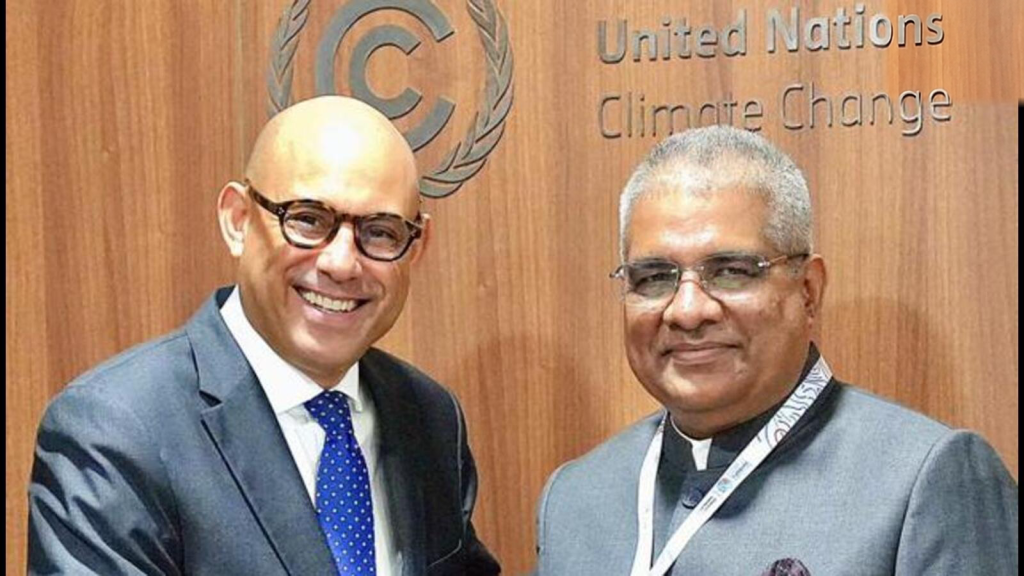
At the ongoing COP31 climate conference in Antalya, India has formally called for a nation-specific, equitable approach to the global “Just Transition” process. Union Environment Minister Bhupender Yadav, who arrived in Antalya early Monday morning, emphasized that developing nations must retain the autonomy to define their own climate pathways, strictly aligned with their unique national priorities and socio-economic circumstances.
Participating in discussions surrounding the Just Transition Work Programme (JTWP)—a United Nations initiative established under the UNFCCC to facilitate fair progress toward Paris Agreement goals—Minister Yadav argued against the imposition of uniform sectoral pathways. He asserted that such mechanisms should not be utilized to create new obligations for developing countries. Instead, he advocated for a framework that enables nations to implement their own transition strategies while ensuring that the needs of workers, vulnerable groups, and local communities remain protected throughout the shift.
“India has consistently emphasized that a just transition must adopt a whole-of-economy and whole-of-society approach,” Yadav stated. He highlighted that India’s own experience confirms that a “one-size-fits-all” strategy is ineffective. As evidence of a more balanced model, he pointed to India’s sub-national heat action and disaster management plans, which specifically address the vulnerabilities of local workers. Furthermore, he emphasized the country’s massive expansion of renewable energy, which is intentionally designed to integrate low-carbon development with the critical necessity of maintaining affordable energy access for the population.
According to the minister, the transition must encompass more than just low-carbon energy shifts; it must broadly address employment, social protection, adaptation strategies, poverty eradication, and sustainable development. He reiterated the critical requirement for developed nations to provide adequate finance, technology transfer, and capacity-building support to assist developing countries in realizing these goals.
Addressing the future of global climate architecture, Yadav called for a clear functional distinction between the current JTWP and the proposed Just Transition Mechanism (JTM). While he suggested that the work programme remain a platform for dialogue and the exchange of experiences, he argued that the mechanism itself should facilitate practical, on-the-ground support through technical assistance and international cooperation. “India supports the operationalisation of a two-tier, party-guided mechanism that is responsive to the needs of developing countries while remaining respectful of national sovereignty and diverse national circumstances,” he added. India identified the just transition, linked inherently to climate justice and the right to development, as a primary negotiating priority for the COP31 summit.