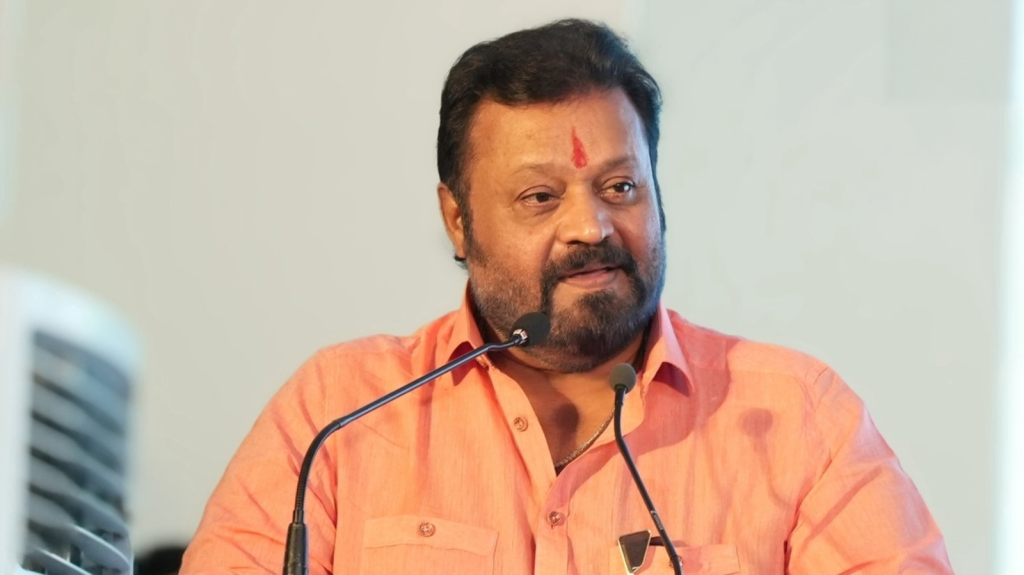
Union Minister of State for Petroleum and Natural Gas Suresh Gopi has strongly defended the rollout of E20 fuel, calling critics of ethanol blending individuals who do not understand the science behind it. Speaking at a youth dialogue in his parliamentary constituency of Thrissur on Tuesday, Gopi dismissed allegations regarding fuel quality, describing the backlash as driven by political motives.
Addressing the gathering, Gopi asserted that those raising allegations against E20 petrol possess twisted political thinking and lack scientific understanding. He further suggested that individuals conducting independent fuel tests might be purchasing petrol in canisters and deliberately adding substances before collecting samples. Gopi remarked that the Central Bureau of Investigation might eventually have to be called in to examine such claims, adding that critics would subsequently turn against the investigative agency as well.
Defending national fuel policy, Gopi explained that increasing ethanol blending from E10 to E20 occurred only after thorough scientific research and evaluation by the Automotive Research Association of India. He characterized ethanol blending as the only corrective measure capable of reducing smoke and harmful emissions from vehicle engines that are not aligned with modern standards. Highlighting international environmental guidelines and the global shift toward cleaner energy, Gopi warned that failing to adhere to emission rules directly jeopardizes planetary health.
The minister’s comments come amid heightened scrutiny over fuel composition across southern states. Authorities in Kerala are currently conducting tests to determine whether petrol supplied at retail pumps exceeds the designated 20 percent ethanol threshold. Last week, the Karnataka government stated that testing of fuel supplied by state-run oil marketing companies revealed ethanol concentrations surpassing the mandated limit, with certain samples recording levels as high as 31.2 percent. The three public sector oil marketing companies—IOCL, BPCL, and HPCL—subsequently issued a joint statement disputing Karnataka’s findings.