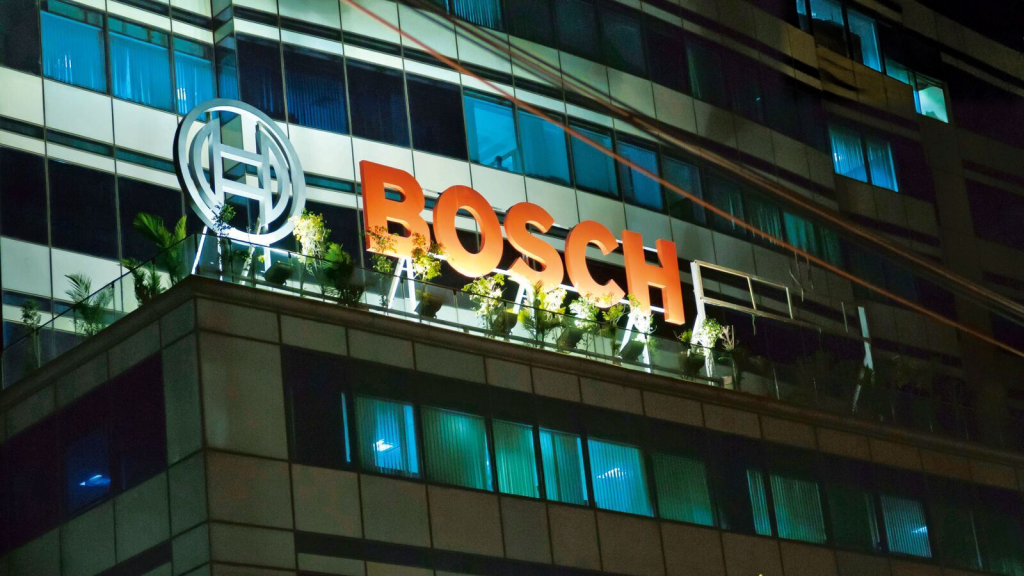
German automotive technology and industrial supplier Robert Bosch GmbH is in preliminary discussions to sell a portion of its Indian technology operations as part of broader efforts to manage corporate expenditures. Tata Consultancy Services Ltd (TCS), India’s largest information technology services firm by revenue, has emerged as one of the primary suitors evaluating the asset. If an agreement is successfully concluded, TCS could absorb approximately 3,000 engineering professionals currently employed within Bosch’s Indian technology footprint.
The potential transaction highlights an accelerating pattern across global capability centers (GCCs) in India, where multinational corporations are increasingly transferring in-house digital, software, and product engineering operations to domestic IT services providers. For global enterprises navigating evolving technological requirements and seeking cost efficiencies, outsourcing specialized captive divisions provides immediate operating expenditure relief while securing long-term service support.
Structure of Bosch’s Global Software Footprint in India
Bosch established its dedicated technology footprint in India in 1997 with the founding of Bosch Global Software Technologies (BGSW) in Bengaluru. Over the past three decades, the operation expanded substantially beyond Karnataka, adding development and engineering hubs in Hyderabad, Pune, and Coimbatore. Outside India, the engineering network includes delivery centers in Vietnam, Poland, and Mexico.
India serves as the operational anchor for Bosch’s captive software division. The country accounts for roughly four-fifths of the company’s total worldwide capability center headcount, which stands at approximately 28,900 professionals. The Bengaluru campus alone accommodates around half of the overall Indian technology workforce. The business division focuses on digital engineering, enterprise software architectures, and embedded automotive software solutions.
The German parent entity, Robert Bosch GmbH, based in Gerlingen, also holds a controlling stake in the publicly traded Indian company Bosch Ltd through its promoter group entities. Bosch Ltd handles the domestic manufacturing and commercial distribution of automotive parts and industrial equipment across India. However, the listed Indian operating entity does not exercise direct administrative or operational control over the BGSW capability center network, keeping the technology units under distinct corporate oversight.
Globally, Robert Bosch GmbH reported annual consolidated revenue of $103 billion in 2025, representing a modest increase of 0.7 percent compared to the prior fiscal year. The company’s core mobility business—encompassing automotive component manufacturing, connected vehicle technologies, and dedicated software solutions for commercial and passenger vehicle manufacturers—generates more than three-fifths of aggregate corporate turnover.
Parameters of the Proposed Carve-Out and TCS Interest
The operational assets currently being considered for divestment specifically involve approximately 3,000 employees engaged in industrial engineering and related technology roles. TCS has engaged in initial discussions regarding a potential purchase. Under the transaction framework being examined, these specialized technical employees would transition to the payroll of the Mumbai-headquartered IT services provider should negotiations culminate in an agreement granting TCS operational control.
The negotiations remain in an exploratory phase, with formal board-level deliberations scheduled for next month to determine whether to proceed with a transaction. The scope of the sale could potentially involve other participating bidders, and the operations under consideration might ultimately be carved out to a single partner or apportioned among multiple services vendors.
For TCS, integrating Bosch’s specialized engineering teams would substantially augment its competencies in physical artificial intelligence. Unlike conventional enterprise software AI, physical AI centers on embedding intelligent models directly into hardware systems, including industrial robotics, autonomous driving platforms, advanced driver assistance systems (ADAS), and edge-sensing machinery operating in complex physical environments.
Strategic Dynamics and Margin Trade-Offs in GCC Takeovers
The potential transaction illustrates the commercial alignment currently driving asset sales between multinational enterprises and commercial IT service firms. For major outsourcers operating in an environment of uneven enterprise tech demand, acquiring a multinational’s internal capability center offers guaranteed, long-term revenue commitments. These transactions routinely couple the transfer of engineering assets with multi-year master service agreements, providing reliable forward visibility.
However, absorbing corporate captive centers introduces short-term profitability considerations. Engineers working within multinational GCCs historically command compensation premiums relative to standard IT services industry wage benchmarks. Taking on these higher wage liabilities can create near-term dilution of operating margins for services providers, who accept compressed initial margins in exchange for multi-hundred-million-dollar contract values and client retention.
From the viewpoint of multinational parent corporations, the financial calculus has shifted significantly. While captive centers were originally designed to function as proprietary innovation engines and low-cost development sandboxes, escalating operational complexities and infrastructure expenditures have narrowed their comparative advantage. Specialized IT service firms operating at vast horizontal scale can often manage infrastructure, personnel development, and delivery cycles more efficiently, allowing parent enterprises to convert high fixed operating costs into variable service outlays.
A Shifting Wave of Captive Reorganizations Across India’s IT Landscape
If concluded, the Bosch transaction would represent at least the fifth major captive center transition to an Indian IT outsourcer within the calendar year. Across global corporate boards, the rapid rise of enterprise generative AI and physical automation is compelling leadership teams to re-evaluate their capital deployment. Rather than maintaining extensive proprietary captive establishments, organizations are redirecting investments toward core algorithmic research and strategic business initiatives while divesting non-core operations to specialized third-party providers.
The nature of these transactions has simultaneously matured. Whereas previous industry cycles were characterized by wholesale divestments where multinational corporations offloaded entire national captive units in single transactions, modern deals exhibit a more surgical structure. Companies now deliberately isolate specific sub-units, functional competencies, or legacy technology groups for carve-outs, retaining strategic proprietary divisions internally while offloading specialized technical support.
TCS has actively pursued this strategy throughout recent quarters. On October 1, the firm concluded the acquisition of the India technology center of US electronics retailer Best Buy for a nominal consideration of ₹1 lakh. Under that agreement, Best Buy India’s engineering staff transitioned to TCS, which assumed responsibility for running an AI-native Capability Center under a multi-year management contract. Earlier in the year, on August 24, TCS finalized a $373 million agreement to acquire MHP, the German management and IT consulting subsidiary of automaker Porsche, coupled with a five-year IT modernization services contract valued at $1.45 billion.
Similar captive acquisitions have been executed across the wider Indian technology sector:
- In July, HCL Technologies Ltd completed the acquisition of New York-based Guardian Life’s Indian GCC operations for $10.5 million. The deal integrated roughly 2,000 technology and operational personnel into HCLTech, creating a dedicated business group focused on the life insurer’s back-end digital architecture, with Guardian’s country head Karunakaran Azhisur moving across to HCLTech leadership.
- In April, Wipro Ltd secured an eight-year, $1 billion services contract from Singapore-based agricultural and food processing giant Olam Group—its largest contract win in nearly six years. In May, Wipro deepened the partnership by acquiring Mindsprint, Olam’s captive digital and technology business, for $375 million.
- Earlier precedents established the viability of the model, including Infosys Ltd’s September 2023 agreement with Denmark’s Danske Bank. Infosys secured a five-year digital transformation mandate valued at $454 million while purchasing Danske Bank’s IT center in India, encompassing 1,400 staff members, for approximately $2 million.
Financial Context Across India’s Tier-One IT Providers
The pursuit of captive carve-outs coincides with diverging growth trajectories among India’s leading technology services conglomerates. For the financial year concluded in March, the country’s top four services providers recorded varied financial results against broader macro headwinds in North American and European corporate technology spending:
- Tata Consultancy Services recorded full-year revenue of $30 billion, reflecting a mild year-on-year contraction of 0.5 percent.
- Infosys registered annual revenue of $20.2 billion, achieving yearly revenue expansion of 4.6 percent.
- HCL Technologies generated $14.7 billion in revenue, posting top-line growth of 6.0 percent over the comparative period.
- Wipro delivered full-year revenue of $10.5 billion, declining by 0.3 percent on an annual basis.
As enterprise clients continue recalibrating internal budgets to accommodate AI transformations, large-scale captive acquisitions offer tier-one providers an established vehicle to secure substantial contract backlogs, defend top-line scale, and integrate specialized engineering teams capable of addressing emerging demands in industrial and embedded software development.