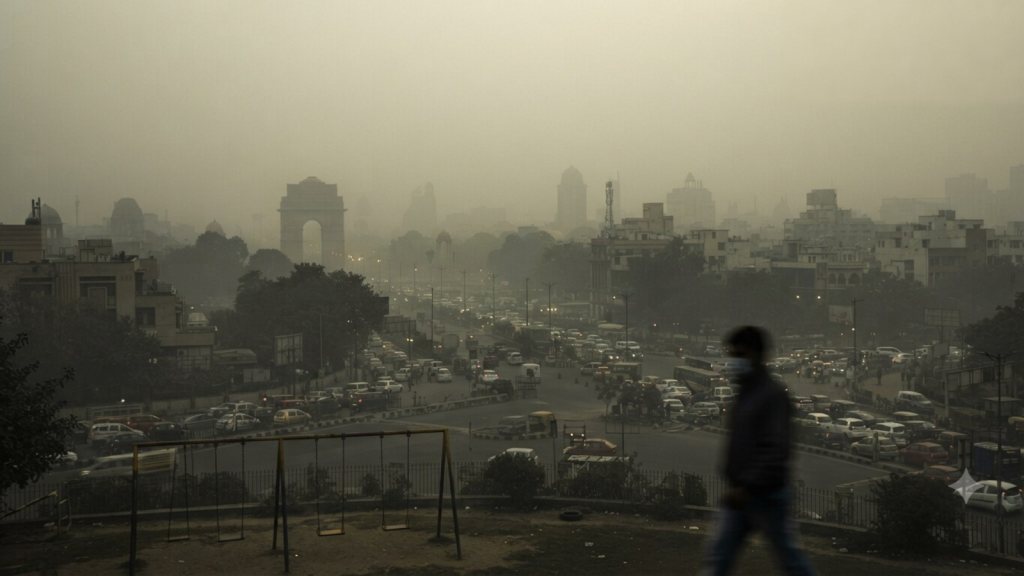
Respiratory illnesses accounted for about 8.2% of all hospitalisation claims at Care Health Insurance in FY26, with children and senior citizens making up 58% of the respiratory-related claims, the insurer’s claims data show. The health insurer issued a public health advisory as air quality deteriorates in parts of India, urging households to protect vulnerable family members and prepare for the medical costs of serious pollution-related illness.
Delhi’s air quality, which had touched a seasonal peak of 428 on the Air Quality Index, has eased but remains in the “poor” category, the advisory says. The Graded Response Action Plan remains in place across Delhi-NCR, with falling temperatures and weaker winds posing a risk of further deterioration.
October marked the FY26 peak
The share of respiratory claims was highest in October 2025. Care Health Insurance recorded an 11% increase in respiratory hospitalisation claims in both September and October 2025, marking the steepest monthly increases during FY26.
Children aged 0–12 accounted for 40% of respiratory hospitalisation claims during the financial year, while senior citizens aged 60 and above contributed 17%. The concentration was higher during the peak pollution months. Children accounted for 48% of respiratory hospitalisation claims in both September and October 2025. Together, children and senior citizens represented 63% of respiratory claims in October 2025.
The findings point to a disproportionate burden on young children and older adults when air quality worsens, with the share of claims from these groups rising sharply during the most polluted months.
Households can cut exposure
Care Health Insurance recommended daily checks of local AQI and limits on outdoor exercise when the reading crosses 200. Outdoor activity should be avoided especially during early morning and late evening hours. People who must go outside on high-pollution days should wear a well-fitting N95 mask.
At home, keeping doors and windows closed during peak pollution hours and using a HEPA-filter air purifier can reduce exposure. Households should take extra precautions for children, older family members and people with asthma, chronic obstructive pulmonary disease, heart disease or diabetes.
People with existing respiratory conditions should keep inhalers and prescribed medicines handy and continue medication as advised by their doctors. Persistent coughing, breathlessness, wheezing, chest pain, palpitations or dizziness should not be ignored. The insurer advised people with these symptoms to seek medical attention rather than self-medicate.
Reducing indoor pollution is equally important. Burning garbage, leaves or crop residue should be avoided, and exposure to smoke from incense sticks and mosquito coils should be limited. The advisory also calls for particular attention to children, pregnant women, senior citizens, people with pre-existing medical conditions and outdoor workers.
Coverage is not a substitute for prevention
“Air pollution is a recurring public health concern in India, affecting not only respiratory and cardiovascular health but also increasing healthcare costs,” said Manish Dodeja, executive director and chief business officer at Care Health Insurance. A serious illness can mean substantial treatment expenses, time away from work and additional financial pressure, he said.
The insurer advised families to review their health insurance coverage regularly and ensure that the sum insured remains adequate as medical treatment costs rise. Policyholders should also check whether their plans include virtual consultation services, which may help them seek initial medical guidance.
Health insurance does not replace preventive measures or timely medical attention. Families should understand their policy’s coverage, exclusions and limits rather than assume that every pollution-related illness or treatment expense will be covered. As air quality remains a concern during winter, the claims data serve as a reminder to protect vulnerable family members while preparing financially for unexpected medical bills.