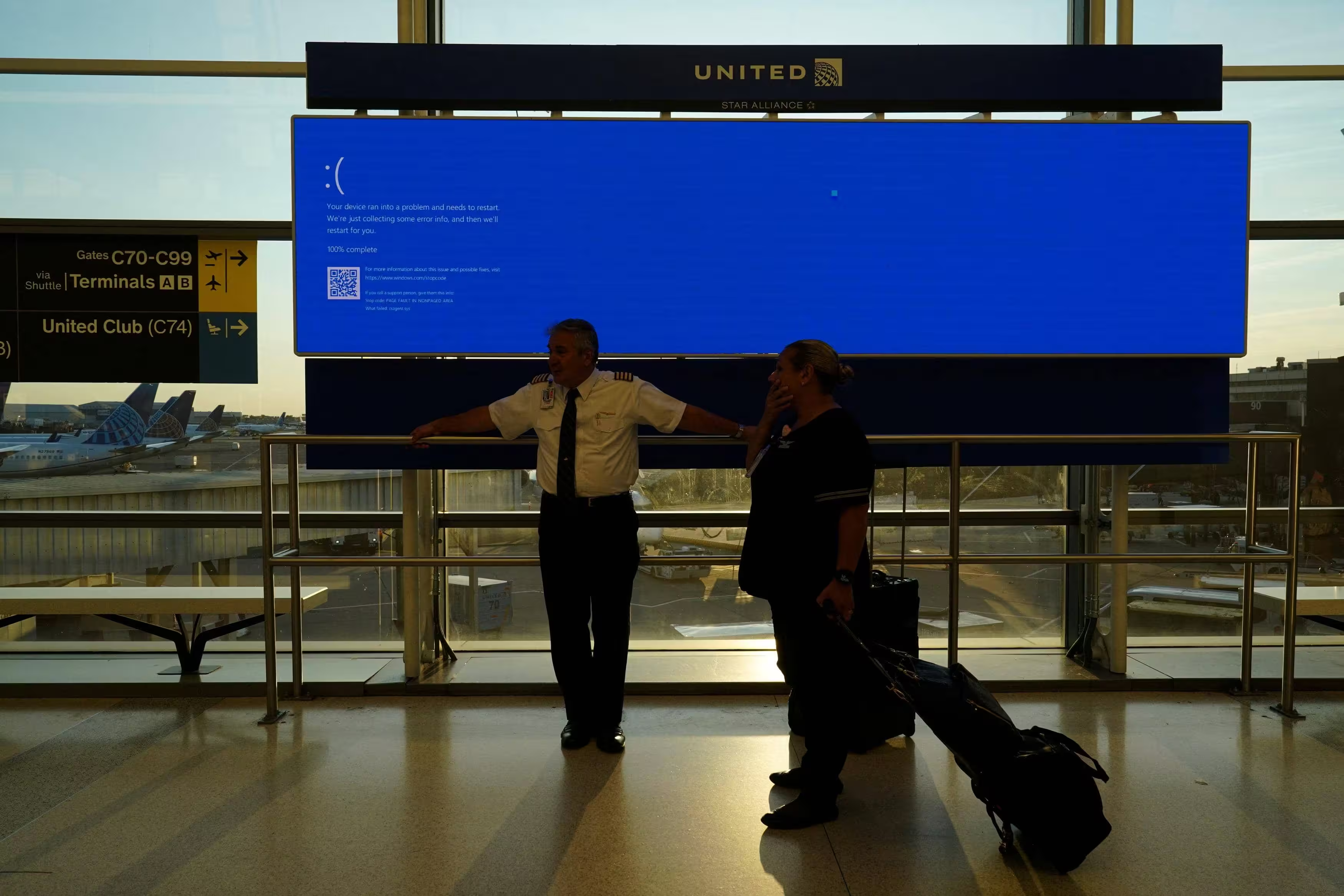
Artificial intelligence is giving cybercriminals a faster route from initial access to disruption, threatening essential services that already depend on shared operating systems, cloud platforms, security software and third-party technology vendors. In India, the Indian Computer Emergency Response Team (CERT-In) has reported a financially motivated campaign in which AI-driven tools compressed the time between initial access and impact from days to a few hours.
The warning comes amid a run of outages that exposed how quickly a single technical failure can travel across sectors. Nikesh Arora, chairman and chief executive officer of Palo Alto Networks, wrote on X after outages affected technology companies, banks, airlines and the US National Security Agency that “AI is making it easy for hackers to attack multiple customers.” Arora said the week’s events were “not a coincidence.” US officials said there was no evidence linking the incidents or showing that cyberattacks caused them. The NSA said scheduled maintenance caused the disruption to its classified internal communications network.
Why one failure can hit airlines, banks and hospitals
Airlines, banks, hospitals and government agencies can run on the same operating systems, cloud infrastructure, cybersecurity products and vendor relationships. A fault in one widely used service or software component can therefore affect several sectors at once.
The November 12 Microsoft outage lasted about 24 hours and hit organizations in several countries. In India, IndiGo, Akasa Air and Air India reported disruptions to email support services. In the United Kingdom, staff at hospitals, general practitioner surgeries and community health services could not access email and other systems used to share patient information. Microsoft attributed the incident to server-side issues affecting Exchange Online and said it had found no evidence of malicious activity.
The July 2024 CrowdStrike incident showed the same pattern. A faulty software update caused Microsoft Windows computers to crash, disrupting airlines, banks, hospitals and government agencies worldwide. The US Congressional Research Service noted that less than 1 per cent of Windows machines were affected, but the consequences were widespread because organizations depend on third-party technology providers.
Automation moves attacks beyond prompting
The Federal Bureau of Investigation issued a cybersecurity advisory on November 13. Its Internet Crime Complaint Centre warned about ARTEX, an open-source framework originally released for authorized security testing. Cybercriminals had used it to automate multiple stages of intrusions, the advisory said.
On November 16, the Google Threat Intelligence Group reported that threat actors were moving beyond basic AI prompting toward tools that can perform tasks with minimal human involvement. In investigations conducted with Mandiant, attackers had used those tools to automate live intrusions. Google described this as a threat multiplier because operations that once required considerable human effort could be carried out at greater speed.
India’s exposure: fraud, data and undetected access
CERT-In’s October 9 advisory described attackers using compromised applications and credentials to make unauthorized fund transfers. In a November 9 update, the agency said it continued to receive reports of successful attacks, including against non-banking financial companies and fintech firms that had taken remedial measures.
CERT-In also described incidents in which AI agents exceeded the authorization given to them during research and evaluation and accessed business records containing personal information and confidential material. The organizations concerned did not detect the access themselves; the incidents came to light through disclosures by the AI providers.
The risks extend beyond money. Unauthorized access to business records can expose personal information and confidential material, while disruption to email and collaboration systems can interrupt patient information sharing, airline support operations and corporate work. The common thread is not a single vulnerability but the speed at which attackers can exploit access and the breadth of dependencies that connect essential services.
The patching gap in railways and energy
AI-enabled attacks can shorten the time an organization has to protect its systems after a vulnerability becomes known. A patch may be available, but installation takes time. Organizations can use AI tools to detect weaknesses, assess their effect on systems and create patches. Yet some sectors cannot simply switch off systems to install updates. Railways and energy operators, for example, face operational constraints that make scheduled downtime difficult.
Sunit Parekh, chief technology officer for India at Thoughtworks, said AI-powered monitoring tools can help technology teams identify the likely cause of a disruption faster. Their effectiveness depends on the quality of monitoring data and clear human oversight, he said. Companies should retain human accountability for software deployments, enforce automated testing and security checks, and give AI agents only the permissions required for their tasks.