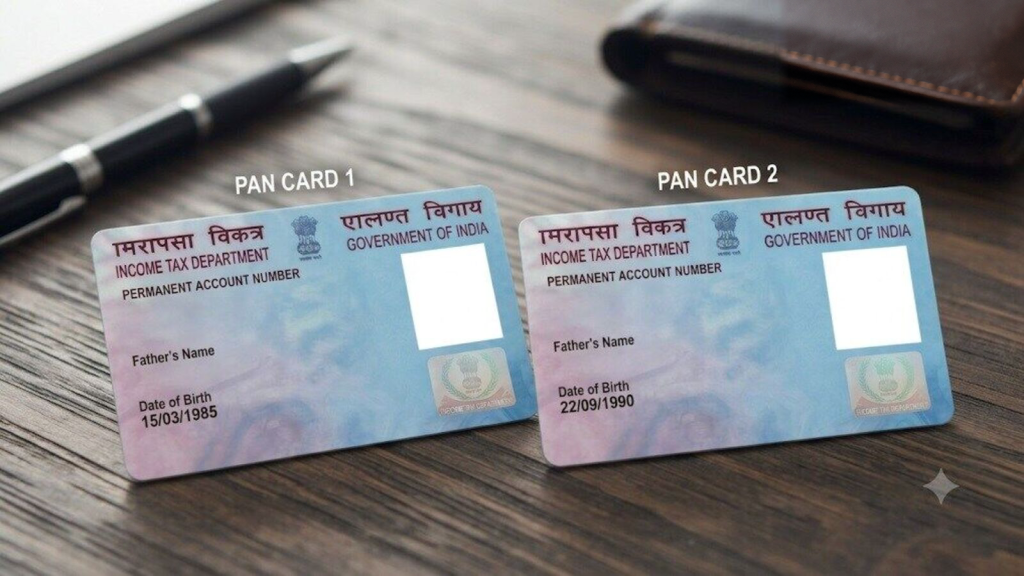
The Income Tax Appellate Tribunal’s Ahmedabad Bench has set aside an appellate order in a ₹7.60 lakh tax dispute involving Gujarat-based firecracker trader VG Agrawal and returned the matter to the Assessing Officer for fresh assessment. The decision gives Agrawal another opportunity to show that the income the tax department treated as undisclosed had already been declared in a return filed under a second, duplicate Permanent Account Number.
The case turns on two PANs allegedly issued to the same taxpayer because of a clerical error. For Assessment Year 2020-21, Agrawal filed his income tax return under one PAN, declaring income from his firecracker business, and submitted an audit report with the return. The Income Tax Department, however, opened reassessment proceedings under Section 147 of the Income-tax Act, 1961, using the other PAN.
How the ₹7.60 lakh addition arose
The Assessing Officer completed the reassessment on March 24, 2025, under Section 147 read with Section 144 of the Act. The officer assessed the taxpayer’s income at ₹7.60 lakh by adding the entire amount, treating it as undisclosed. Agrawal’s position was that the department had not taken into account the return already filed under the other PAN.
During the proceedings, he submitted bank statements, account confirmations from the relevant parties and other supporting documents. He also filed an affidavit asking for the duplicate PAN to be deleted, saying the two PANs had been allotted because of a clerical mistake. His central argument was that the same business income could not be taxed again merely because it had been reported under a different PAN. The Assessing Officer did not accept the explanation and proceeded with the addition.
First appeal dismissed over missing evidence
Agrawal then appealed to the Commissioner of Income Tax Appeals at the National Faceless Appeal Centre in Delhi. The appeal did not succeed. The Commissioner observed that he had not effectively participated in the appellate proceedings and had not placed the necessary evidence and arguments before the appellate authority. The Commissioner found that, without adequate supporting evidence, there was no reason to interfere with the Assessing Officer’s decision. The appellate authority accordingly upheld the assessment order and dismissed the taxpayer’s grounds, leaving the ₹7.60 lakh addition in place.
Tribunal restores case to Assessing Officer
Agrawal challenged that appellate order before the ITAT Ahmedabad Bench. The tribunal set aside the Commissioner’s order and restored the matter to the Assessing Officer for a fresh assessment. The remand allows the taxpayer to present his case again and to establish that the firecracker business income had already been declared in the return filed under his other PAN.
The order does not amount to a final finding that Agrawal’s explanation has been accepted or that the ₹7.60 lakh addition has been permanently deleted. The addition will require fresh consideration by the Assessing Officer. The tribunal’s decision therefore reopens the factual question at the centre of the dispute: whether the income assessed under one PAN was the same income already disclosed under the other, and whether the duplicate PAN arose from a clerical error, as Agrawal claims.
The fresh assessment gives the taxpayer another opportunity to place the return, audit report, bank statements, party confirmations and the affidavit on the duplicate PAN before the Assessing Officer. For the department, the remand requires a fresh determination on whether the ₹7.60 lakh addition can be sustained once the return filed under the other PAN is brought into the assessment record.