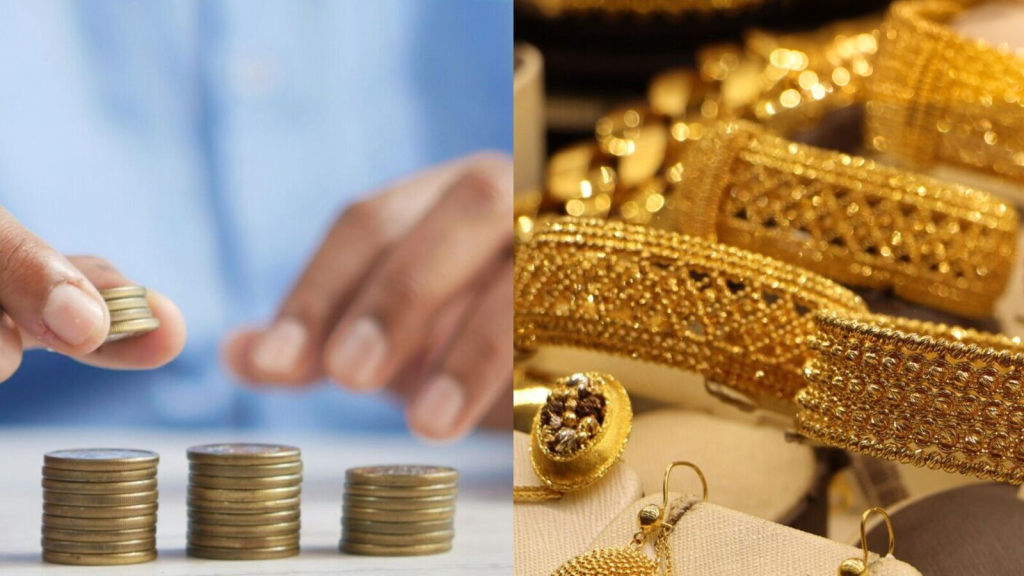
Banks and gold-loan non-banking financial companies have stepped up notices and reminders to borrowers, asking them to pledge additional security or repay a part of their outstanding loan, after the falling value of pledged gold pushed many loans past the loan-to-value limits set by the Reserve Bank of India.
Gold prices in India kept sliding on Wednesday, with the average price of 24-karat gold at ₹12,458–₹12,632 per gram on November 25. Prices are down roughly 30% to 35% from their January 2026 record highs, in the domestic market as well as globally.
The correction is good news for buyers and investors, but it has become a concern for households that borrowed against jewellery and coins. When the market value of pledged gold drops, the loan-to-value ratio on an existing loan climbs above the ceiling the RBI permits, which is what prompts lenders to demand more collateral or a partial repayment.
Where the RBI caps gold loan LTV
- Loans up to ₹2.5 lakh: maximum LTV of 85%
- Above ₹2.5 lakh and up to ₹5 lakh: maximum LTV of 80%
- Above ₹5 lakh: maximum LTV of 75%
Saurabh Sood, owner of Shimla-based Savitri Jewellers, told ANI that lenders could come under considerable pressure as the value of collateral had declined sharply. “Lending companies and authorised jewellers who provide loans against gold will suffer substantial losses because they have given loans against an asset whose value has now fallen considerably. Their portfolios will also come under tremendous pressure,” he said.
Bad loans are already rising
Gold loan non-performing assets rose to 0.3% at the end of August, up from 0.16% as of March 31, 2026, according to TransUnion CIBIL. The credit bureau added that borrowers holding multiple gold loan accounts are more prone to delaying payments. Under RBI norms, a gold loan account may be treated as an NPA if instalments of principal, interest or both are overdue for more than 90 days.
Auctions in focus
Mayank Sharma, president-lending at IIFL Finance, told PTI that the industry could see a significant increase in gold auctions this year once prices stay at lower levels over a longer period, something that has not happened in the last two years. “At the current gold price, there will be a greater focus on customer collections and interest collections,” he said, adding that auctions are likely to rise across the industry as lenders step up recovery efforts following the price correction.
Pinaki Nath Banerjee, CEO-designate of the Federation of Gold Loan Companies, said repayment challenges have emerged after the correction in gold prices, though fresh loan demand remains healthy. He said the industry is unlikely to witness the same quantum of growth as before, because the earlier rise in gold prices had increased the value of the underlying collateral and supported higher loan growth.