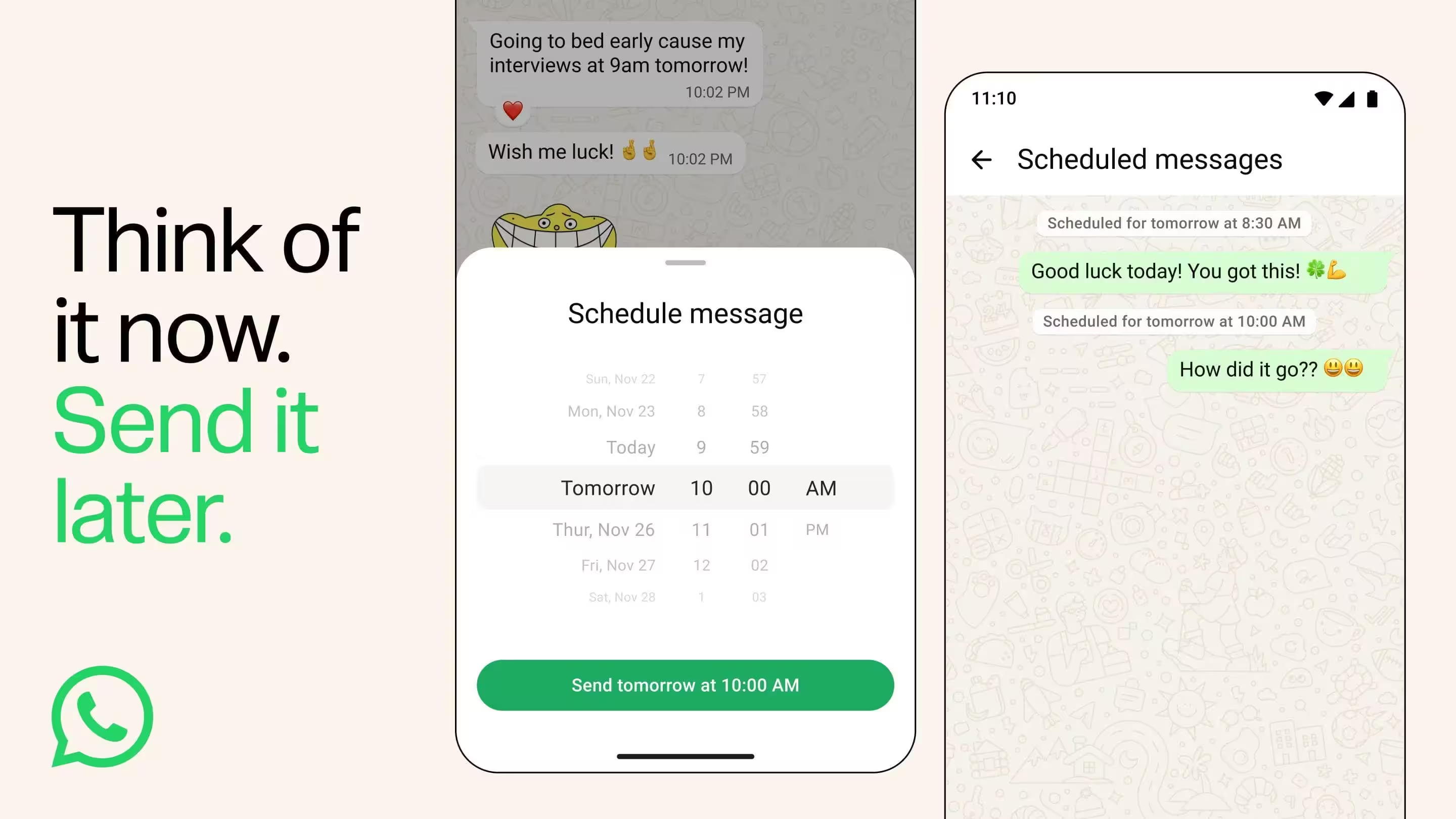
WhatsApp has introduced scheduled messages, a feature that lets users compose a message in advance and choose when it is delivered. The option works in both individual and group chats, and a message can be queued for any time between 10 minutes and 14 days ahead.
WhatsApp frames the feature around timing: birthday wishes that land at midnight, reminders, and messages aimed at recipients in other time zones. Because a message can be set days in advance, the sender does not need to be awake or near the phone when it goes out.
How to schedule a message on WhatsApp
Scheduling is done inside the chat where the message will appear. The steps are:
- Open WhatsApp and go to the individual or group chat where the message needs to be sent.
- Type the message in the chat’s text box.
- Press and hold the “Send” button.
- Select the date and time at which the message should be delivered.
- Confirm the schedule.
The message is then queued for delivery at the selected time.
Checking and cancelling a scheduled message
WhatsApp said users can see every message they have scheduled, so upcoming messages and their delivery times can be reviewed before they are sent. If plans change, a scheduled message can be deleted from that list any time before its delivery time; once deleted, it will not reach the recipient.
What recipients see
Scheduled messages arrive looking like ordinary messages. WhatsApp said recipients will not see any indication that a message was written or scheduled earlier.
Delivery does not depend on the sender’s phone staying on. WhatsApp said scheduled messages will be sent at the selected time even if the sender’s handset is switched off or has run out of battery.
The feature covers text messages, photos and videos. WhatsApp also confirmed that scheduled messages remain protected by end-to-end encryption, meaning only the participants in a conversation can read them.
Availability
WhatsApp is rolling the feature out globally over the coming weeks. It may not reach every user immediately, and access will widen as the rollout progresses. Because the release is global, it applies to WhatsApp users in India as well once it arrives on their devices.