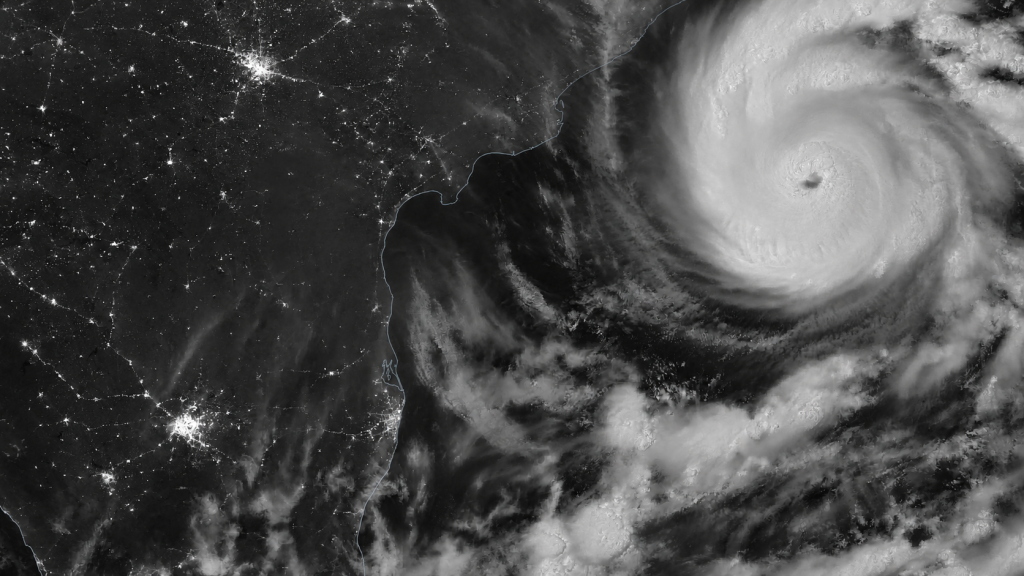
A developing depression over the Bay of Bengal is projected to intensify into a cyclonic storm by the evening of November 16 and escalate into a severe cyclonic storm by November 17, before steering toward the Andhra Pradesh coastline over the subsequent two days, according to forecasts by the India Meteorological Department.
The weather disturbance has been progressing north-northwestward as it gathers strength over the central parts of the south and adjoining west-central Bay of Bengal. Meteorological observations recorded the system moving at a speed of 7 kilometers per hour during the late afternoon on Sunday, November 15. At 1730 hours IST, the depression was centered over the southeast and adjoining southwest Bay of Bengal, near latitude 10.2 degrees North and longitude 86.8 degrees East. The system was positioned approximately 630 kilometers east-northeast of Trincomalee in Sri Lanka, 670 kilometers west-southwest of Sri Vijaya Puram in the Andaman and Nicobar Islands, 780 kilometers east-southeast of Chennai, 920 kilometers south-southeast of Visakhapatnam, and 1,030 kilometers south-southeast of Gopalpur in Odisha.
Meteorologists project that the system will sustain its north-northwestward trajectory, strengthening into a cyclonic storm over the central parts of the southern and adjoining west-central bay before upgrading into a severe cyclonic storm over the west-central waters by the evening of November 17. From that juncture, the severe storm is expected to advance northwestward directly toward the Andhra Pradesh coast across the following two days.
Andhra Pradesh Seeks Central Aid After Cyclone Murasu Losses
The approaching weather system comes as coastal Andhra Pradesh continues to address extensive destruction caused by Cyclone Murasu, which inflicted an estimated ₹2,484.43 crore in infrastructure and agricultural losses across the state. Andhra Pradesh Chief Minister N. Chandrababu Naidu appealed to the central government on Sunday for prompt financial assistance to support ongoing relief and rehabilitation operations.
A seven-member central assessment team, headed by Chittaranjan Das, Joint Secretary in the Union Ministry of Home Affairs, concluded on-site inspections across nearly 60 affected locations before holding a virtual consultation with Chief Minister Naidu. The delegation conducted comprehensive damage surveys throughout Bapatla, Palnadu, Eluru, and East Godavari districts. Members examined inundated agricultural fields, breached canals, damaged thoroughfares, and destroyed residential structures. The inspection included interactions with local cultivators at Surappagudem, visits to submerged paddy fields at Ravulapalem, evaluations of the Kommu canal and irrigation infrastructure at Kunakalamarri, and inspections of damaged fishing vessels along the coast at Chirala. The team also evaluated losses to horticulture, livestock, and duck-rearing facilities in Boppudi, alongside disrupted road connections crossing the Jaladi stream between Yedlapadu and Turlapadu.
Chief Minister Naidu noted that prevailing El Niño patterns combined with two consecutive cyclones hitting the state within a narrow window severely magnified the scale of destruction. State authorities had implemented precautionary safety protocols before the cyclone made landfall and initiated emergency repair works immediately afterward. Basic road connectivity, electrical grids, and telecommunication networks were restored within 24 hours of the storm’s passage. The state administration is currently processing crop insurance claims and distributing additional subsidized food rations to support displaced and affected households.