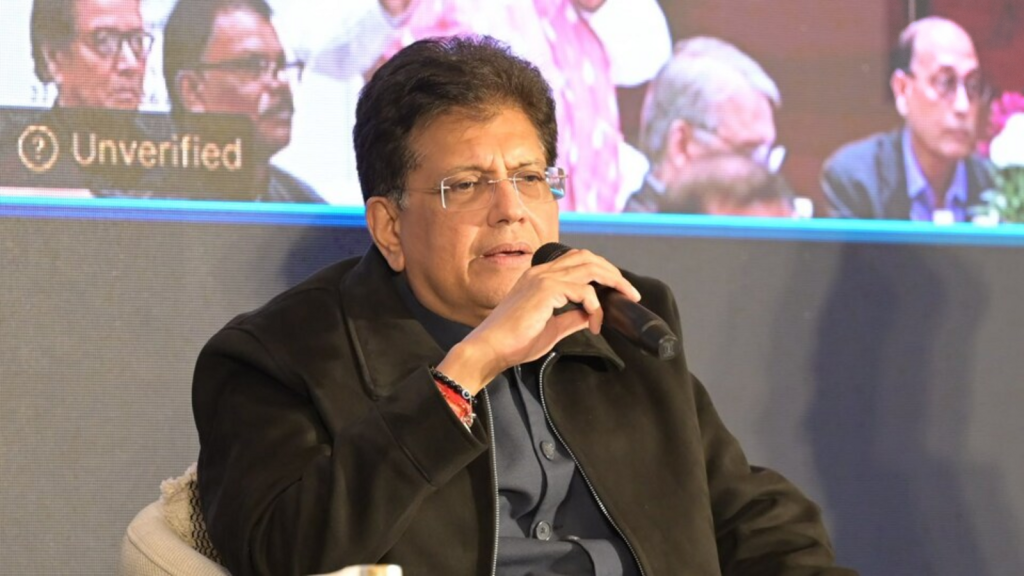
Union commerce and industry minister Piyush Goyal said on Friday that the India-United States trade deal has reached its final stage and is “close to culmination”, after being held back by procedural issues.
Addressing the India Debt Capital Market Summit 2026 virtually, Goyal said the processes and pathway that had stalled the agreement were now taking shape. “The US trade deal is close to culmination. The process and pathway, which was always something which held back finalising the deal, is now taking some shape,” he said.
The remarks follow the latest US Trade Representative (USTR) report, which proposed 25 per cent tariffs on imports from India while providing that they be capped at 17 per cent if the two countries agree to a bilateral trade deal.
The negotiations have run alongside a strained trading relationship, driven largely by a series of tariffs imposed by the Donald Trump-led administration. Since April 2025, India has faced shifting US tariff rates, beginning at 26 per cent and then moving to 25 per cent — a step US officials linked to New Delhi being a “maharaja of tariffs”.
The levies against India later reached 50 per cent after Trump announced an additional 25 per cent on Indian goods over the country’s purchases of Russian crude oil and petroleum.
On February 2, 2026, the two governments announced a framework for the bilateral trade deal. Under that framework, tariffs on India would fall to 18 per cent, and the additional 25 per cent imposed over Russian oil purchases would be removed.
On November 25, however, the US announced that India would be subject to 25 per cent tariffs under a Section 301 investigation by the USTR into excess capacity.
Washington added that the rate could come down to 17 per cent if a trade deal is struck, leaving the final tariff level tied to negotiations that Goyal now describes as nearing completion. The minister did not give a date for the agreement to be signed or set out which outstanding processes remain to be resolved.
India’s export sectors have been watching the tariff trajectory closely since the rates began shifting in April 2025, with the February framework and the November proposal setting out two different end points for duties on Indian goods.