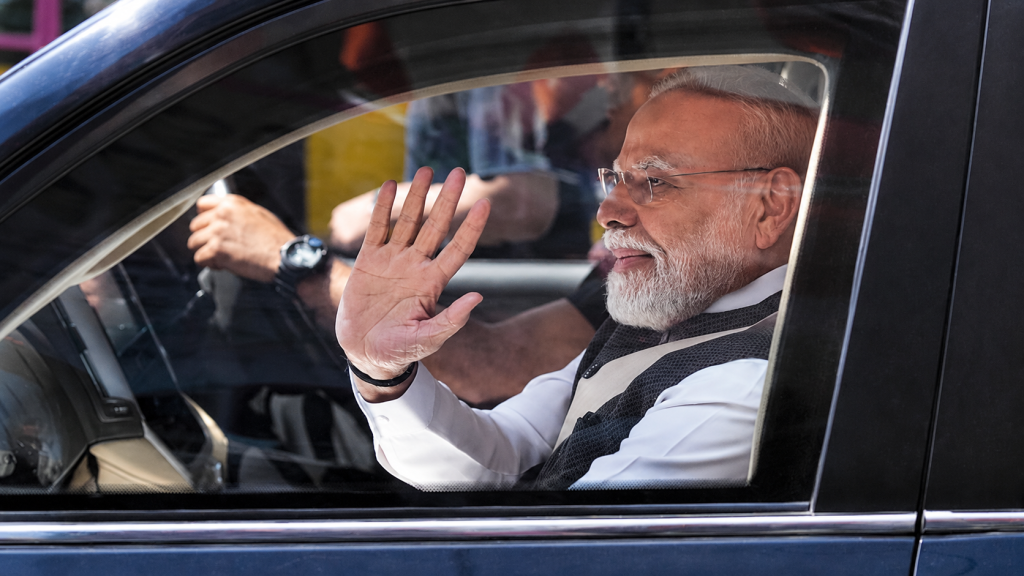
Prime Minister Narendra Modi departs for Manila on Monday, November 16, for a three-day official visit to attend the annual India-ASEAN Summit and the East Asia Summit. Hosted by the Philippines on the margins of broader regional gatherings, the high-level diplomatic mission focuses on expanding commercial partnerships, expediting trade agreement revisions, and fortifying maritime security frameworks across the Indo-Pacific.
During the visit, the Indian delegation will participate in a crowded roster of multilateral and bilateral engagements. Alongside the primary ASEAN-India gathering and the East Asia Summit on November 17, Modi is scheduled to join the leaders of Australia, Japan, and the United States for a Quad Leaders’ Summit. The convergence of international leaders in the Philippine capital also brings opportunities for bilateral talks on regional stability, defense cooperation, and global supply chain resilience.
Expanding Regional Diplomacy and Global Attendance
The Association of Southeast Asian Nations serves as a primary geopolitical and economic collective in Southeast Asia, encompassing Indonesia, the Philippines, Malaysia, Singapore, Brunei, Thailand, Vietnam, Myanmar, Laos, Cambodia, and East Timor. India participates alongside major global powers, including the United States, China, Japan, and Australia, as an official dialogue partner.
Delegations from member nations, international organizations, and partner states have assembled in Manila for sessions spanning November 15 through November 17. The multilateral agenda features several prominent heads of state and senior officials, including United States President Donald Trump, Brazilian President Luiz Inácio Lula da Silva, Canadian Prime Minister Mark Carney, and Russian Foreign Minister Sergey Lavrov. Central among the multilateral discussions will be ongoing global and regional conflicts, specifically addressing the protracted crisis and armed conflict in Myanmar.
Strategic Role of ASEAN in India’s Foreign Policy
ASEAN remains an essential pillar of India’s Act East policy and its wider strategic vision for a free, open, and rules-based Indo-Pacific. Ministry of External Affairs Secretary (East) Rudrendra Tandon noted that the 11-member bloc operates as a vital engine for peace, stability, and regional economic prosperity. Annual bilateral trade between India and ASEAN member countries currently stands at approximately $122 billion.
India’s geographic position as an Indian Ocean littoral state bordering the Southeast Asian maritime zone underpins the strategic partnership. Strengthening collective and bilateral relations with ASEAN member states is viewed by New Delhi as essential to building resilience against rapid geopolitical shifts while safeguarding maritime commons and fostering overall Asian stability. Enhanced coordination among naval forces, combined exercises, and information sharing among like-minded Indo-Pacific partners form key components of India’s security agenda at the talks.
The wider East Asia Summit framework, initiated in 2005, continues to serve as the region’s premier forum for addressing pressing strategic, security, and defense challenges. This platform brings together the core ASEAN member countries alongside dialogue partners including India, China, Japan, South Korea, Australia, New Zealand, the United States, and Russia.
Review of Trade Agreements and Economic Cooperation
On the economic front, India is pressing for an expedited conclusion to the comprehensive review of the ASEAN-India Trade in Goods Agreement (AITIGA). The pact originally entered into force in 2010, but formal review discussions commenced six years ago to rectify persistent trade imbalances. India’s imports from ASEAN partner nations have exceeded $80 billion, creating a substantial deficit that Indian negotiators seek to address through improved market access and modernized regulatory terms.
Negotiations surrounding AITIGA remain complex, as any revision requires unanimous consensus across all ASEAN member economies. Alongside the multilateral review, Indian officials are pursuing direct bilateral negotiations with individual member states to improve trade facilitation, dismantle non-tariff barriers, and open commercial opportunities across manufacturing, technology, and service sectors.
Stance on Engagement with Myanmar
Addressing the ongoing internal strife in Myanmar, Indian diplomats underscored the necessity of sustained engagement rather than isolation. New Delhi maintains that isolating the military-led administration risks creating a strategic vacuum that could be exploited by external powers, emphasizing that diplomatic interaction remains the only viable path toward resolution.
India continues to support ASEAN-led initiatives aimed at facilitating dialogue within Myanmar, arguing that effective diplomacy must respect the country’s intricate societal fabric and political history. Officials reaffirmed that constructive dialogue, patient diplomacy, and sustained engagement remain fundamental to promoting regional peace and preventing further humanitarian distress along India’s northeastern borders.