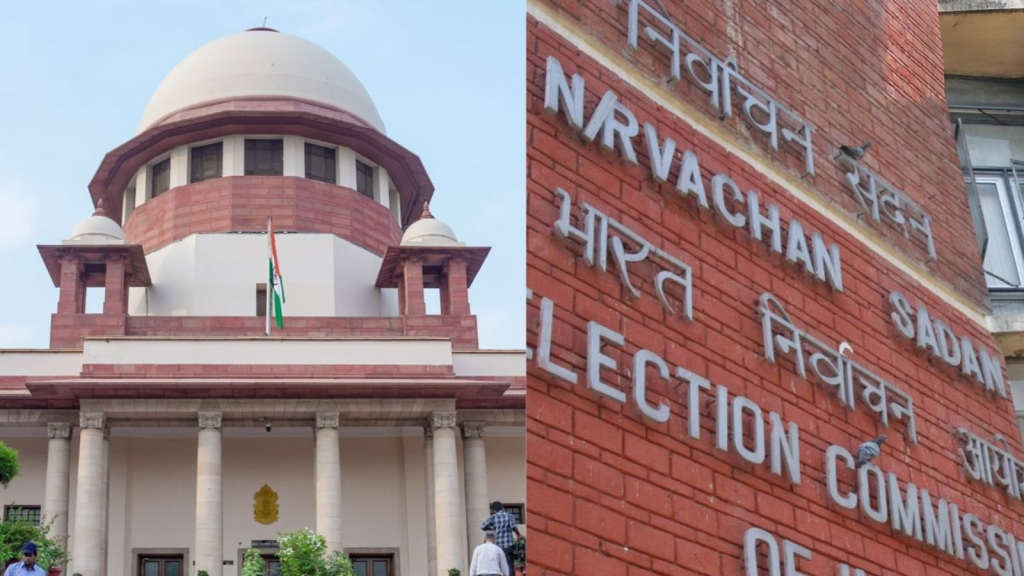
A new delimitation commission would be constituted immediately after the Delimitation (Second) Bill takes effect, with a serving or former Supreme Court judge as chairperson and the Chief Election Commissioner or an Election Commissioner nominated by him and the State Election Commissioner of the state concerned as ex-officio members.
The bill is expected to be introduced in the Lok Sabha during the special sitting of Parliament beginning November 30. The three-member panel would be formed only if the legislation is passed by both Houses and receives the President’s assent.
Section 3 of the draft provides for the constitution of the commission. The chairperson is to be appointed by the central government from among persons who are or have been judges of the Supreme Court. The second member is the Chief Election Commissioner, or an Election Commissioner nominated by the CEC, serving ex officio. The third is the State Election Commissioner of the state concerned, also ex officio.
Cabinet clearance and a companion bill
The Union cabinet cleared the revised legislation on Friday, ahead of the special session. The government is expected to bring the new delimitation bill alongside the Constitution (132nd Amendment) Bill, 2026, which seeks to amend constitutional provisions so that the one-third reservation for women can be implemented after the first delimitation exercise following its commencement. The government’s delimitation plan envisages a 50% increase in seats for every state, with the ceiling on the Lok Sabha’s strength rising to 850.
Associate members
The commission would associate ten members from each state to assist it: five Lok Sabha MPs representing that state and five members of its legislative assembly. In states with five or fewer MPs, all such MPs would become associate members and the total number of associated members would be reduced accordingly.
Associate members would not have voting rights or the power to sign any decision of the commission. The MPs would be nominated by the Speaker of the Lok Sabha and the MLAs by the speaker of the respective state legislative assembly, keeping in mind the composition of the House concerned.
The panel may also seek assistance from the registrar-general and census commissioner, the surveyor general, government officials, geographic information system experts and other relevant individuals. Those offices hold the census and survey data on which constituency boundaries are drawn.
Meghalaya, Nagaland and Jammu and Kashmir
For Meghalaya and Nagaland, the third member would be a person nominated by the governor of the state concerned rather than the State Election Commissioner.
The bill also refers to constituencies of the Union territory of Jammu and Kashmir under Pakistan’s occupation. It states that the Election Commission shall act as the delimitation commission for delimiting constituencies in the legislative assembly of the Union territory falling under that occupation, when the area ceases to be so occupied.
The draft clarifies that once an Election Commissioner has been nominated as a member, a further nomination of an Election Commissioner would be made only to fill a casual vacancy of that member under Section 6.
Term and mandate
The term of the commission would be specified by the central government through a notification after the bill is passed and becomes an Act. The Union government may, at the commission’s request, extend the term by such further period as it considers necessary.
The commission would readjust the allocation of seats in the House of the People among states and Union territories, and the total number of seats in the legislative assembly of each state, in accordance with the Act. It would also divide each state and Union territory into territorial constituencies on the basis of the latest census figures. The two tasks would together cover both Parliament and the state assemblies.