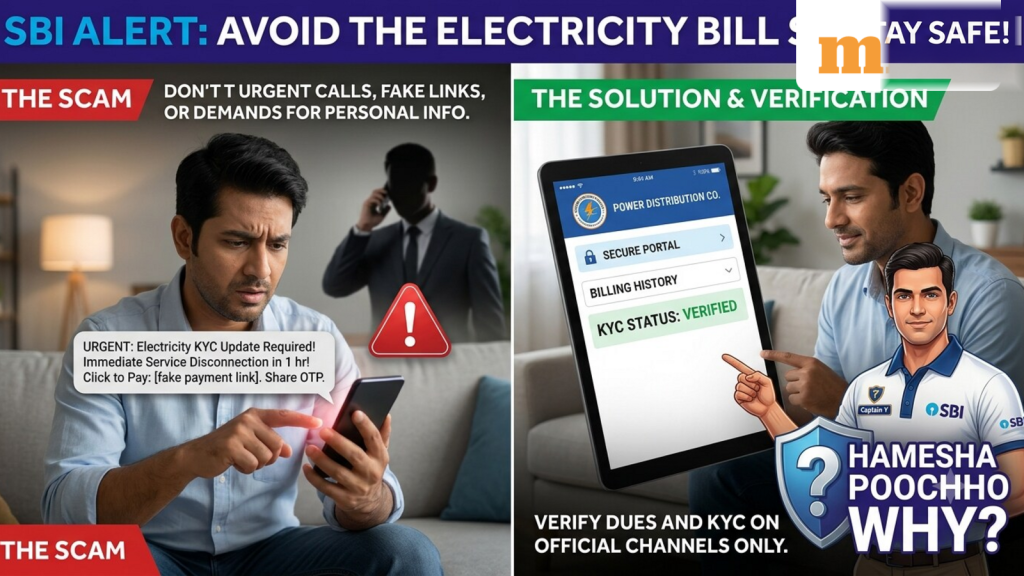
The State Bank of India (SBI) has issued a formal warning to citizens regarding the rising prevalence of “electricity bill scams.” In these fraudulent schemes, criminals impersonate officials from electricity departments and various utility service providers to manipulate unsuspecting customers into divulging confidential data or making unauthorized financial payments.
As detailed in an official post on its X handle dated 11 November 2026, the bank explained that fraudsters frequently create a climate of manufactured urgency. Victims typically receive sudden calls or messages claiming that their electricity, gas, or water bills are currently pending. These scammers often threaten that failure to take immediate action or update Know Your Customer (KYC) details will result in the abrupt disconnection of essential utility services. This pressure tactic is designed to force victims into making hasty payments or revealing sensitive information, including One Time Passwords (OTPs), PINs, and other personal credentials.
SBI emphasized that the threat manifests through various channels, including suspicious payment links, text messages, and forwarded WhatsApp messages that appear to come from official service providers. Once a user clicks on an unverified link or shares financial details, they become highly vulnerable to significant financial loss.
Through its cyber-safety initiative, “Captain Y – Your Cyber Rakshak,” the bank is actively educating the public on how to identify and thwart these attempts. The core advice provided by SBI is to adopt a cautious mindset: if a message creates an immediate sense of panic, it should be treated with extreme suspicion. The bank’s mantra, “Hamesha Poochho Why?” (Always ask why), serves as a reminder for consumers to pause and verify the legitimacy of any unexpected request before acting.
To safeguard against such fraud, SBI recommends several critical defensive measures. First, consumers must resist the urge to act in haste when receiving unsolicited calls or messages that demand immediate payments or KYC updates. Second, individuals should never click on random links, download attachments from unknown sources, or share critical banking information such as CVVs, ATM PINs, or OTPs.
The most effective way to verify any claims of outstanding dues or required KYC documentation is to interact directly with the respective utility provider. Customers should consult only the official websites or verified customer care channels of their service providers. Ultimately, SBI reinforces the point that receiving an urgent message does not necessarily indicate a genuine threat of service disconnection. By maintaining vigilance and independently confirming any demands for payment or personal information, consumers can successfully avoid falling prey to these digital threats and prevent potential financial regret.