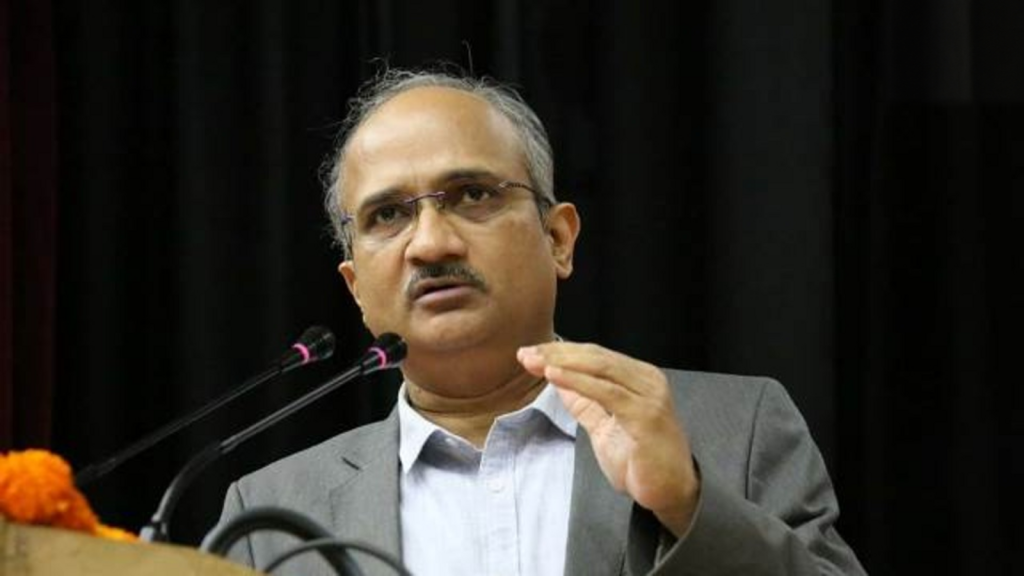
BITS Pilani Vice-Chancellor V. Ramgopal Rao has answered a question now confronting university faculty: why should a student attend a lecture when much of what is taught is already available online? His answer is that the value of a teacher lies in what they bring beyond information, particularly the ability to develop curiosity, critical thinking, judgment and problem-solving skills.
The issue has gained urgency as AI tools change how students access information, understand complex subjects and solve academic problems. Instant explanations and solutions from AI platforms have called into question the relevance of traditional classroom lectures. Rao, who leads the BITS Pilani group of institutions and is a former director of IIT Delhi, addresses the challenge in a document titled Primer for Young Faculty: Some Personal Observations for a Successful Career.
In the document, Rao sets out four priorities for young faculty members: quality teaching, meaningful research, innovation and institution-building. The observations draw on more than 25 years as a faculty member at IIT Bombay and IIT Delhi and now at BITS Pilani. Academic success, he writes, should be measured by more than publications, grants and professional positions; those four priorities are presented as central to a successful academic career.
Rao emphasizes that the quality of teachers ultimately determines the quality of a university. Faculty members, he says, must focus on developing students’ curiosity, critical thinking, judgment and problem-solving abilities. Rao frames the question in the first person: ‘Why should a student attend my class when much of what I teach is already available online?’ His answer lies in what faculty members bring to the classroom beyond information. Developing those abilities, he adds, is the faculty member’s responsibility.
What Rao asks young faculty to do
- Rethink teaching: Focus on student understanding rather than completing the syllabus.
- Adapt to AI: Develop students’ critical thinking, curiosity and problem-solving abilities.
- Never underestimate students: Do not judge them entirely by initial academic performance, communication skills or background.
- Promote independent thinking: Encourage students to question ideas and think independently.
- Treat students well: Students may not remember the lecture, but they will remember how teachers treated them.
- Invest in students: Teachers should invest in students and their achievements.
The complete seven-page document is intended for young faculty and is shared on Rao’s Twitter and LinkedIn handles.