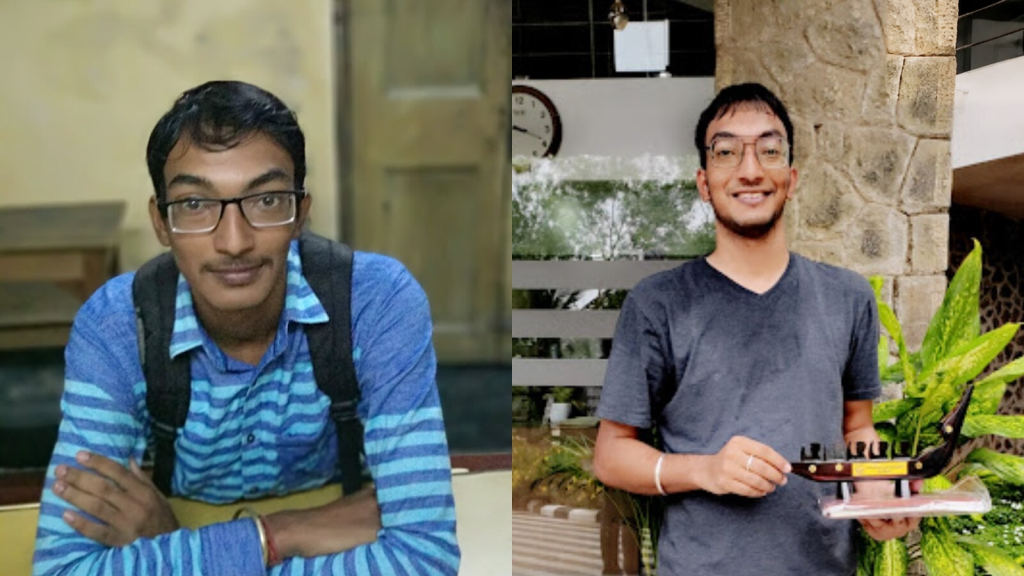
Hemant Tulsan’s third CAT attempt took him from 9 percentile in Data Interpretation and Logical Reasoning to 98.8 percentile in the same section and an admission offer from IIM Kozhikode. The 26-year-old from Kolkata, who graduated from the institute in 2025 and now lives in Bengaluru, says the turnaround rested on one final attempt, ₹20,000 from his father for application forms, months of solitary preparation in Dhanbad, and help from people who stepped in when fees threatened to end the journey.
A grocery shop, a slipped disc and a change in fortunes
Tulsan grew up in a Marwari joint family in Kolkata. His father ran a grocery shop and his mother was a homemaker. He began helping at the family business when he was in Class 8. According to Tulsan, the family was financially comfortable during his early childhood, but the situation began to change after his father suffered a slipped disc. The grocery business subsequently faced losses, and by 2015-16 the family was struggling financially.
His father continued working despite the medical condition. Tulsan said his father would leave home at 8 am and return around 10 pm. The routine continued even as back pain persisted, a detail that later framed the son’s own view of sacrifice and effort.
Tulsan completed his schooling at Shri Jain Vidyalaya and later pursued a BCom degree at St Xavier’s College, Kolkata. He described himself as an average student, recalling that he failed examinations during his school years and struggled academically in college. His interest in an MBA developed after attending a workshop during graduation, where he learnt about the career opportunities and professional growth offered by management education.
Three attempts, and a sharp detour in DILR
Tulsan first appeared for the Common Admission Test in 2020. He had enrolled at a coaching institute and paid approximately ₹60,000 to ₹70,000, but the Covid-19 pandemic forced classes online. He admitted that he relied heavily on coaching and lacked a preparation strategy of his own. The first attempt ended with a score of around 44 percentile.
In 2021, he improved considerably, scoring 85.5 percentile overall. But his DILR performance dropped to just 9 percentile after he selected two difficult sets during the examination. The section became the clearest symbol of how narrow the margin can be in a highly competitive entrance exam: an overall score had climbed, but one section had collapsed.
Although he also appeared for other management entrance examinations, securing admission to his preferred institution remained difficult. After the second unsuccessful CAT attempt and rejections from several colleges, people around him suggested that he consider joining a private institution or finding a job. One of his mentors offered a different view: “Either go for a job or go all in.”
Tulsan decided to make one final CAT attempt, despite knowing that his family could barely afford another year of preparation.
₹20,000 from his father, then an online scam
One of the biggest challenges was arranging money for college application forms. Tulsan estimated that he needed approximately ₹50,000 to apply to all the institutions he was targeting. When he approached his father, he received ₹20,000, the maximum amount his father could arrange at the time. Tulsan said his father gave him the money without informing anyone else in the family.
Before leaving for Dhanbad to prepare for CAT, he handed the money to his younger brother for safekeeping. His brother subsequently lost it in an online scam. Another relative offered financial help, but that money was eventually used during a family emergency.
Left with limited options, Tulsan began asking teachers, acquaintances and even strangers to pay their own application fees using his credit card, allowing him to collect cashback. Over two months, he managed to save approximately ₹3,000 through this arrangement. He used that amount to apply to MDI.
Alone in Dhanbad, rebuilding the weakest section
Determined not to repeat his previous mistakes, Tulsan moved to Dhanbad and dedicated himself entirely to CAT preparation. He spent Durga Puja and Diwali alone, following a strict daily schedule that included reading articles, practising questions from all three CAT sections and taking mock tests. He also created a colour-coded accountability sheet to track his progress and identify areas requiring improvement.
His biggest focus was DILR, the section that had hurt his performance in previous attempts. Instead of attempting the most difficult questions, he developed a strategy to identify sets he could solve accurately. The approach worked. In CAT 2022, Tulsan scored 97.84 percentile overall and 98.8 percentile in DILR.
Recalling the day he checked his response sheet, Tulsan said he was sitting beside his father. He had been particularly worried about his performance in quantitative aptitude. When he realised he had done well, he began crying and hugged his father. Although his father did not fully understand the significance of the score, he became emotional seeing his son’s reaction. Tulsan also shared his CAT result in a LinkedIn post.
The interview: correlation, dandruff and a first merit list
Despite the improved score, Tulsan continued to face challenges during the admission process. He eventually received offers from IIM Shillong and other management institutes, but his interview at IIM Kozhikode remained particularly memorable.
Scheduled for March 3 at a hotel in Kolkata, it was his first offline admission interview. Running late, he arrived on a motorcycle with his hair dishevelled. The interview began with a question: “What is the difference between correlation and regression?” Tulsan admitted that he did not know the answer.
The interviewers later noticed his hair and jokingly asked whether it was a new trend. When he mentioned using anti-dandruff shampoo, the conversation unexpectedly turned to the causes of dandruff. His response, “sir, mummy told me”, left both professors laughing. The discussion subsequently moved to economics, government finances and current affairs. Despite struggling with some questions, Tulsan said he maintained his composure and continued interacting naturally with the panel. He eventually secured admission to IIM Kozhikode in the first merit list.
A delayed loan and Ankur Warikoo’s intervention
Receiving the admission offer brought another financial challenge. Tulsan needed ₹1 lakh to confirm his seat, but his education loan had been delayed. According to Tulsan, entrepreneur and content creator Ankur Warikoo stepped in and paid the amount directly to IIM Kozhikode, allowing him to complete the admission formalities. Tulsan said he later repaid the entire amount in two instalments of ₹90,000 and ₹10,000.
After IIM Kozhikode: jobs, mentoring and a changed home
Tulsan graduated from IIM Kozhikode in 2025, a milestone he celebrated in another LinkedIn post. He subsequently worked with Snapsight, Juniper Green Energy and Pocket FM while also building a YouTube channel focused on MBA preparation and interview guidance.
According to Tulsan, around 300 students he has mentored have collectively secured more than 1,000 admission offers from management institutions. His family’s circumstances have also improved. His parents and younger brother have moved into a separate rented three-bedroom apartment, while his father has retired after years of working despite persistent back pain.
Having received financial assistance during his own journey, Tulsan said he now tries to help other aspirants. He has paid a junior’s ₹1 lakh IIM admission fee and supported several students with their CAT application fees. Looking ahead, he hopes to expand his business and establish an NGO that teaches communication and professional skills to underprivileged children.
Reflecting on his journey, Tulsan acknowledged that pursuing his dream without a fallback plan was risky, particularly given his family’s financial situation. However, he believes consistency, accountability and the willingness to ask for help played an important role in changing his circumstances.