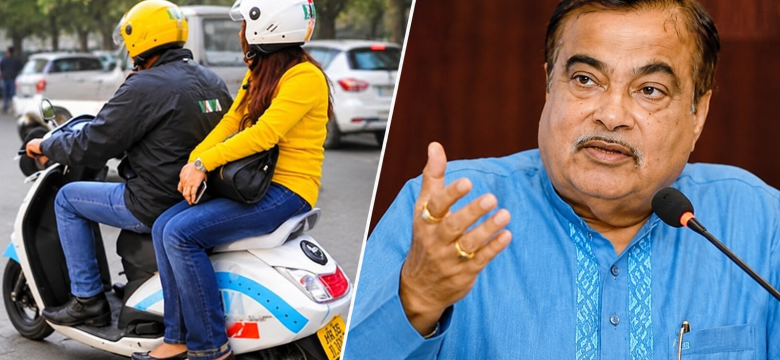
Two Karnataka transport unions have opposed Union Minister for Road Transport and Highways Nitin Gadkari’s proposal to allow privately owned, white-board two-wheelers to operate as bike taxis through app-based aggregator platforms, warning that the move would weaken the livelihoods of commercial drivers and raise passenger safety and insurance concerns.
The Karnataka App-Based Workers’ Union and the Swabhimani Chalakara Trade Union set out the objection in a joint statement. They said permitting private motorcycles and scooters to ferry passengers for hire would create an unequal playing field for auto-rickshaw, cab and taxi drivers who invest in commercially registered vehicles and carry higher operating costs.
Commercial drivers, the unions said, pay for vehicle permits, commercial insurance, fitness certificates and other regulatory requirements, often after buying their vehicles with loans. Allowing privately registered vehicles to offer the same passenger services without equivalent financial and regulatory obligations would put existing operators at a disadvantage.
“Two conflicting sets of rules cannot govern two groups performing the same work on the same roads,” the unions said. “If white-plate vehicles are allowed to operate commercially, existing commercial drivers must also be exempted from commercial taxes, insurance and permits.”
The unions warned that applying different regulatory standards to drivers performing identical services could distort competition in the transport sector. They also alleged that the proposal would benefit ride-hailing aggregator companies by letting them expand their fleets without bearing the same regulatory costs associated with commercial vehicles.
Insurance and safety concerns
Beyond the impact on livelihoods, the unions flagged risks to passenger safety and insurance coverage. They pointed out that policies for privately registered two-wheelers generally cover personal use and may not extend to commercial passenger transportation. That gap, they said, could create complications after an accident involving a bike taxi, particularly when passengers seek compensation.
The unions asked Gadkari to reconsider the proposal and urged the Karnataka government and its Transport Department to maintain their existing regulatory position against allowing white-board two-wheelers to operate as bike taxis.
Gadkari’s proposal
Gadkari made the proposal on November 19, urging state governments to allow privately owned motorcycles and scooters to ferry passengers through app-based aggregator platforms such as Rapido, Uber and Ola. Speaking at the “RIDE: A Showcase of Aggregator and Delivery Services” programme, the minister called on states to implement the Centre’s Motor Vehicle Aggregator Guidelines (MVAG) 2025, which provide for the aggregation of non-transport motorcycles for passenger journeys.
He also said he had written to state governments asking them to permit private two-wheelers to be registered with aggregator platforms for commercial passenger services. Gadkari said Rajasthan was the only state to have fully implemented the guidelines, while Haryana and Uttar Pradesh had adopted them partially.
“I called all state Transport Commissioners and requested them to take the initiative … in their respective states as well,” he said, referring to allowing all non-transport or private motorcycles for passenger rides through aggregator platforms.
Defending the proposal, Gadkari said allowing private motorcycles and scooters to operate as bike taxis could generate substantial employment opportunities, particularly for people facing poverty, unemployment and socio-economic disadvantages. He argued that the initiative could help millions of people earn a livelihood by connecting privately owned vehicles with app-based transport services.
“Poverty, hunger, unemployment, and socio-economic and educational backwardness exist everywhere. Why should not we provide people with employment opportunities so that they can live with dignity and self-respect?” he said. Gadkari also suggested that opening up private two-wheelers to aggregator platforms could benefit 15-20 crore people by creating new earning opportunities.