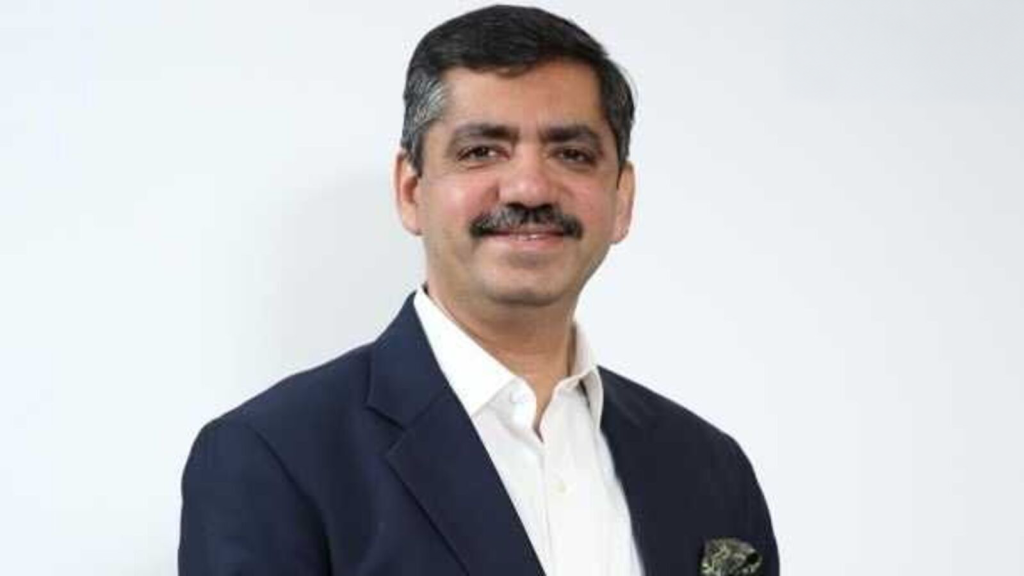
M1xchange is in talks with banks in Russia and Brazil about technology-sharing partnerships that would extend India’s Reserve Bank of India-regulated invoice-discounting model into two major Brics economies, chief executive Sundeep Mohindru said. The company is India’s second-largest Trade Receivables Discounting System (TReDS) platform and is run by financial services firm Mynd Solutions Pvt. Ltd. The discussions center on sharing the operating framework behind TReDS, the same approach M1xchange has used to enter other overseas markets.
TReDS is an RBI-authorized electronic platform on which micro, small and medium enterprises (MSMEs) can receive early payment for unpaid invoices. Multiple financiers bid to buy the receivables at a discount, giving the MSME working capital while the financier later collects payment from the buyer. The platform brings several financiers into competition for the receivable rather than leaving the MSME to negotiate with a single lender. India has five RBI-authorized TReDS platforms, which together financed invoices worth ₹3.47 trillion in fiscal year 2026, RBI data show.
The Russia and Brazil discussions follow an August Brics decision in Jaipur, taken during India’s presidency of the grouping, to explore a common invoice-discounting system for small businesses facing delayed payments. Mohindru said the Brics nations would have to reach a collective agreement for the Jaipur Consensus plan to be realized. “We have already engaged and started giving technology for other Brics countries to start TReDS within their local geography… So, there is an engagement with Russia. There is engagement with Brazil,” he said.
The potential market is significant. The five original Brics members—Brazil, Russia, India, China and South Africa—account for 28% of global trade and nearly 49% of the world’s population. For M1xchange, the overseas push extends a model that India pioneered in 2014 to speed up payments to small businesses and reduce a delayed-payment backlog that stood at ₹8.1 trillion in FY26, according to the FY26 Economic Survey.
M1xchange has already expanded its model across more than half a dozen African markets, although those operations are at different stages of development. Its platform has been operational in Nigeria since 2023, while its technology has been deployed in Ghana and Rwanda ahead of their go-live. The company is in advanced discussions in Ethiopia, Kenya and other markets, and is working with regulators and industry bodies across West Asia and Africa to expand into more countries.
The domestic TReDS market has grown rapidly. The total value of invoices financed through Indian platforms—known as throughput—reached ₹3.5 trillion in FY26, up nearly 50% from the previous fiscal year and nearly 4.6 times the FY23 level, data from the Union ministry of MSME and the RBI show. The Indian model is intended to address a persistent problem for smaller suppliers: buyers can delay payment, leaving MSMEs short of working capital. By allowing financiers to discount unpaid invoices, TReDS gives those suppliers an earlier source of funds.
M1xchange’s own domestic business has expanded alongside the market. It had onboarded around 125,000 MSME sellers and about 17,000 buyers as of November, Mohindru said. Of those buyers, around 13,000 are MSMEs. The platform is set to complete ₹4 trillion in cumulative throughput since its launch in 2017, he added.
One area of growth is financing between smaller businesses. M1xchange allows MSMEs to recover dues from other MSMEs, rather than only from larger corporate buyers. “We call this small-to-small. That means the buyer is also small, and the seller is also small,” Mohindru said. Throughput from such small-to-small invoice discounting is expected to reach approximately ₹5,000 crore in FY27, up from around ₹1,400 crore in FY26.
Mynd Solutions reported revenue of ₹166.01 crore and net profit of ₹20.11 crore in FY26. Revenue grew 56% year-on-year. Separately, RBI data show that M1xchange financed invoices worth ₹77,083 crore in FY25 and ₹1,24,434 crore in FY26, an increase of 61.4%. Its throughput between April and October 2026, the first seven months of FY27, stood at ₹92,998 crore.
The overseas expansion comes as India seeks to widen the use of TReDS at home. An amendment to the MSME Development Act during the monsoon session of Parliament mandated that central public sector undertakings pay MSME suppliers only through TReDS platforms. It also gave state governments the power to onboard state PSUs onto the platforms. The change is aimed at bringing more invoices into the regulated channel and giving MSME suppliers a firmer route to early payment. The amendment during the monsoon session followed the government’s broader effort to use TReDS to shorten payment cycles for MSMEs.
The government is also trying to widen the pool of financiers on TReDS. In the FY27 Union Budget, it announced the securitization of invoice financing, allowing financiers to pass on receivables from large buyers to other financiers as securitized assets. Indian TReDS platforms are looking to onboard insurance companies and investment funds to add another layer of financing. Ketan Gaikwad, managing director and chief executive of India’s largest TReDS platform RXIL, said the platforms were exploring these additions. The framework would allow a financier collecting dues from a large buyer to pass those receivables to insurance firms or other funds joining a TReDS platform. That step could create a secondary market in receivables, allowing risk to be distributed beyond the original financier.
M1xchange’s international expansion began with a 2022 partnership between its subsidiary Mynd Fintech and Nigerian firm Fiducia Data Services. Fiducia launched a digital supply-chain financing platform using M1xchange’s TReDS framework in 2023. In December 2024, M1xchange said it planned to extend similar collaborations to other countries in 2025.
The Russia and Brazil talks are the latest move in that effort. Any Brics-wide system would still require the collective agreement Mohindru described, while M1xchange’s existing overseas deployments show how the company is seeking to adapt the Indian model to local banking partners and regulators. Terms of the discussions were not disclosed.