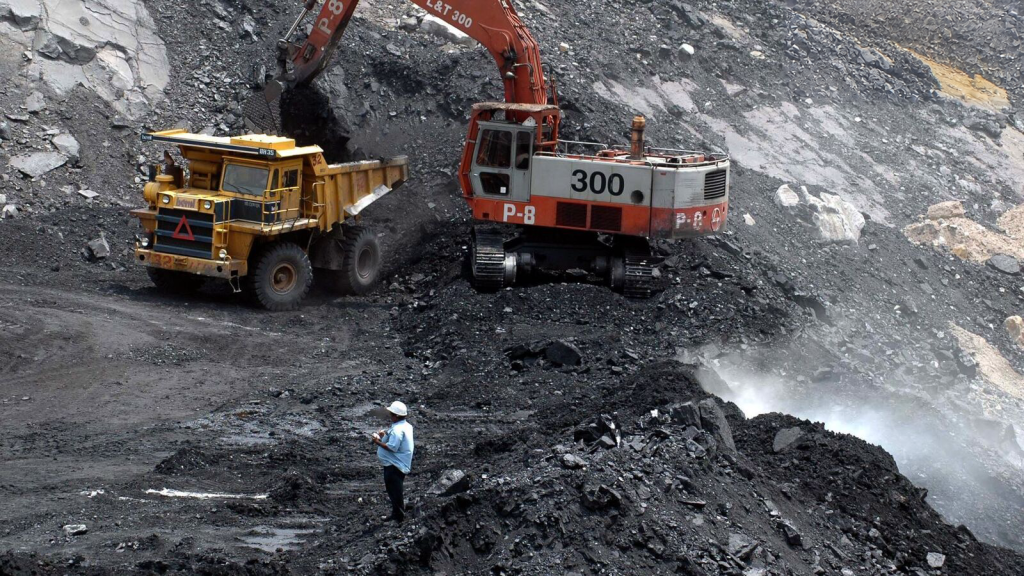
Mahanadi Coalfields Ltd, the premier coal-producing subsidiary of the state-controlled giant Coal India Ltd, has officially set the price band for its upcoming initial public offering (IPO) at ₹129 to ₹136 per share. This strategic move aims to secure a company valuation of up to ₹90,000 crore, equivalent to approximately $9.6 billion. As the largest listing of a state-owned enterprise in India for the current year, the transaction is poised to be a significant milestone in the government’s ongoing initiative to monetize national assets.
The offering is structured entirely as an offer for sale (OFS), involving the divestment of 661.8 million shares, which corresponds to a 10% equity stake currently held by the parent company, Coal India. Given that no fresh shares are being issued as part of this process, the capital raised through the public offering will accrue directly to Coal India rather than the subsidiary itself. At the upper threshold of the prescribed price band, the IPO is projected to generate ₹8,981 crore, or roughly $955 million.
Interested institutional and retail investors can participate in the share sale starting 19 November, with the subscription period scheduled to conclude on 23 November. Market participants anticipate that the company will officially make its debut on the stock exchanges on 27 November. This listing marks the third instance in 2026 where a subsidiary of Coal India has been brought to the public market, following the successful listings of Bharat Coking Coal Ltd (BCCL) in January and the consultancy firm Central Mine Planning & Design Institute Ltd (CMPDIL) in late March.
The aggressive pursuit of subsidiary listings has prompted discussions among market analysts regarding the potential long-term structure of Coal India. Some investors have expressed concerns that the spin-off strategy might transform the parent entity into a holding company, potentially inviting the valuation discounts typically associated with such structures. However, Coal India management has actively sought to alleviate these concerns by emphasizing that the parent company is aggressively diversifying its operations to maintain its relevance as an independent commercial entity.
Mukesh Agrawal, director of finance at Coal India, underscored the organization’s strategic pivot during an interview. He noted that the disinvestment proceeds from the three subsidiary listings in 2026—totaling nearly ₹11,900 crore—are being reinvested into high-growth sectors. The group’s objective is to evolve into a multi-faceted energy and resources conglomerate spanning coal production, coal-to-gas conversion, mineral exploration, power generation, and renewable energy. These diversification initiatives are projected to contribute roughly 10% of the group’s total revenue within the next few years, having already begun to generate initial returns with ₹15 crore reported in the quarter ending June 2026.
Regarding the specific valuation of the subsidiary, Mahanadi Coalfields would command approximately one-third of the parent company’s total valuation if priced at the top end of the band. Coal India currently maintains a market capitalization of approximately ₹2.4 trillion, trading at seven times its earnings. Agrawal dismissed concerns that the listing might trigger an immediate re-rating of the parent stock, noting that the market effectively values subsidiaries individually. He cited the example of BCCL, which was valued at ₹23 per share on the company’s internal books, but saw its market price surge to ₹32 per share upon listing, thereby enhancing the value of Coal India’s retained 90% stake.
Looking ahead, the pipeline for state-owned asset monetization remains robust. South Eastern Coalfields Ltd has already filed its draft prospectus earlier this month for a 668-million-share offering. Furthermore, other entities, including Northern, Central, Western, and Eastern Coalfields, are currently being evaluated for potential divestment in the medium term. Analyst sentiment remains largely positive, with 19 of the 26 analysts monitoring Coal India recommending a buy, while only two suggest selling, reflecting an overall 12-month return potential of 9.4%.
Incorporated in 1992, Mahanadi Coalfields serves as a cornerstone of India’s state-controlled coal sector. With primary operations concentrated in the Talcher and Ib Valley coalfields in eastern India, the firm is a formidable producer, having recorded an output of 218.3 million metric tonnes in the fiscal year ending March 2026. This performance represented over 28% of Coal India’s aggregate production and provided approximately one-fifth of the total domestic coal supply for the nation.
Uday Anant Kaole, chairman and managing director of Mahanadi Coalfields, described the company as a ring-fenced, cash-generating asset separate from the parent’s broader diversification efforts. He maintained that the company would continue to focus strictly on its core competency of efficient coal production. While the company saw a modest 1.3% year-on-year decline in net profit to ₹10,678 crore and a 2.6% decrease in revenue to ₹30,550 crore for FY26, Kaole dismissed the notion that renewable energy is threatening their business model. He clarified that the dip in sales to the power sector—which fell 4.82% during the same period—was primarily due to power utilities reducing their operating expenses by depleting stockpiles. This trend has since reversed as power generators prioritize replenishing their reserves, signaling a return to demand growth.