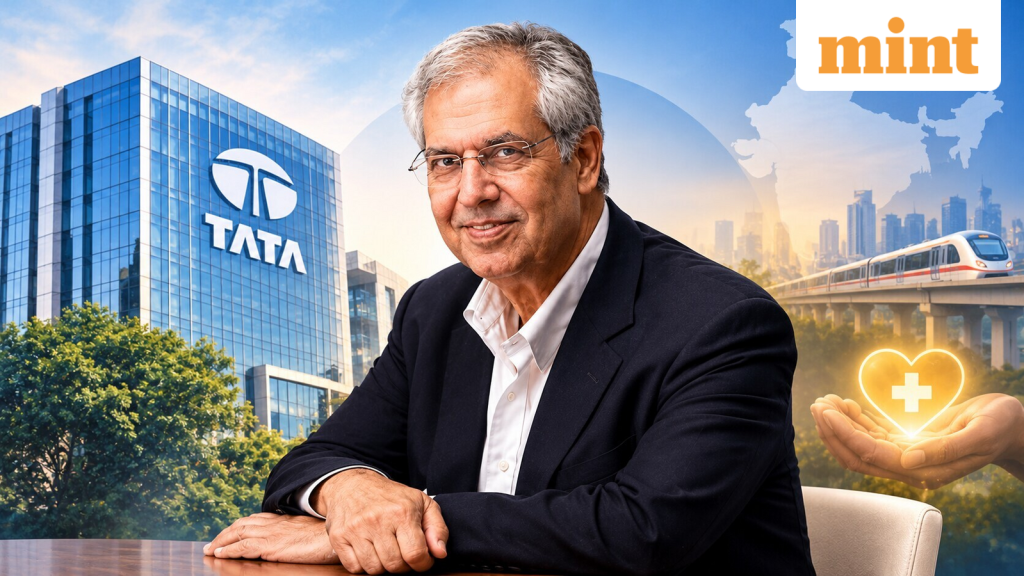
Noel Tata, chairman of Tata Trusts, said the Tata Group’s long-term direction remains anchored in nation-building and philanthropy, but large projects need stronger execution discipline and sharper capital allocation. Speaking at the 24th Hindustan Times Leadership Summit in New Delhi on Saturday, he said his concern was not the conglomerate’s investment strategy but how effectively those investments are delivered.
“In terms of governance, the strategic direction remains the same. Philanthropy on one hand, nation building on the other. This is independent of the leadership, of personalities. This is embedded in the DNA of the group,” Tata said. He added: “I have not questioned the direction of what we’ve done. I question sometimes the delivery of what we’re doing.”
His remarks point to the balance the group must strike across a portfolio that includes automobiles, technology, steel, aviation and consumer businesses. Several of its investments are capital-intensive and have long gestation periods, making planning, project delivery and efficient capital deployment important. Tata said large investments require careful planning and execution to ensure capital translates into tangible outcomes.
Trusts sharpen focus on outcomes
Tata reviewed the Trusts’ existing programmes after becoming chairman in October 2024, following Ratan Tata’s death. The exercise reinforced the need to measure philanthropic initiatives by their actual outcomes rather than simply the money spent. “It wasn’t just, okay, I spent so many crores doing this. What did we actually achieve with that expenditure? What could be the maximum impact that we could arrive at?” he said.
He cited initiatives combining nutrition, water harvesting and agriculture in underserved regions, alongside programmes aimed at creating employment opportunities for women. Increasing the number of earning members in a household, he said, could significantly improve family incomes.
The proposed hospital network is part of the Trusts’ effort to expand healthcare access in underserved regions while making philanthropy more outcome-oriented. Tata indicated that the location of the facilities would be chosen to balance access to medical talent with the goal of serving areas that lack adequate care.
The Trusts are also planning to establish 40-50 not-for-profit general-purpose hospitals in underserved parts of India. Tata said the hospitals would be located near reasonably sized cities to ensure access to doctors and medical professionals. Building healthcare facilities in extremely remote locations could make it difficult to attract and retain doctors.