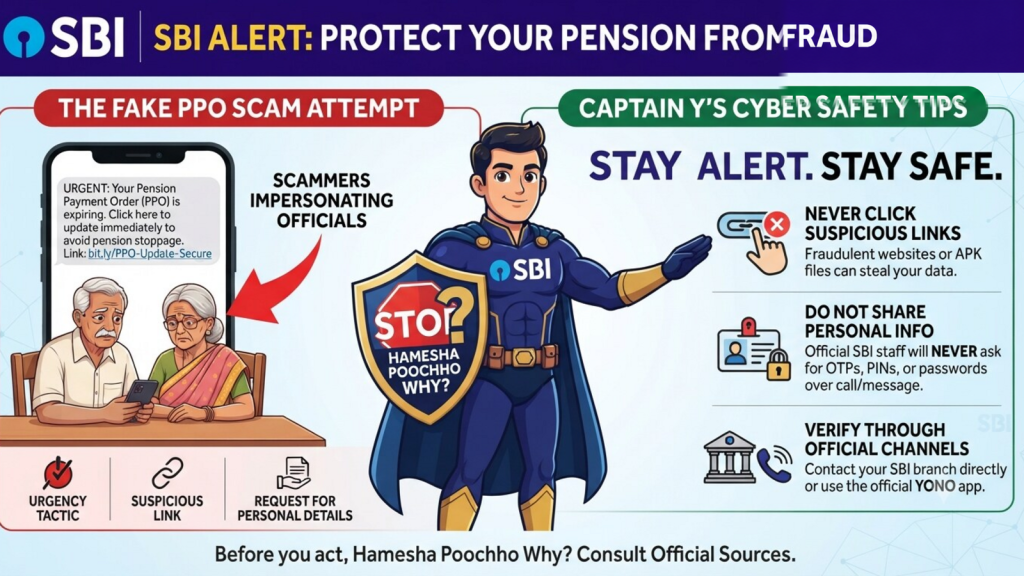
The State Bank of India (SBI) has warned pensioners about a fast-evolving cyber fraud in which criminals impersonate pension officials, build trust and send fake messages urging people to share personal information under the pretext of updating their Pension Payment Orders (PPOs). In a post on its official X handle on 18 November, the bank said fraudsters may exploit pensioners’ concerns about their pension payments and take advantage of their advancing age to trick them into clicking suspicious links and disclosing confidential information. The warning is aimed at protecting pensioners who depend on regular pension credits, the bank said.
SBI issued the alert through its cyber safety campaign featuring “Captain Y – Your Cyber Rakshak.” The campaign uses the character Captain Y to communicate the warning in simple terms. The post said cyber fraudsters may pose as pension officials and send fake messages with suspicious links, asking individuals to share personal details for PPO updation. It included a 1-minute 34-second video explaining how the scam works and urging pensioners to remain vigilant and protect personal data, OTPs, ATM PINs and other critical information.
The advisory describes a common tactic used by scamsters who pose as government or banking officials: they create a sense of urgency and persuade unsuspecting people to discuss and disclose confidential information. SBI said pensioners should be extremely cautious about unsolicited SMS messages, WhatsApp communications, phone calls or emails claiming that their PPO details need urgent updating. Such messages may contain links to fraudulent websites, APK files or similar apps designed to collect personal details, banking information, passwords or other sensitive credentials.
Pensioners should verify any request through official banking channels instead of responding to text messages, phone calls or emails about pension disbursement, SBI advised. They should use official banking channels to confirm a request rather than relying on contact details supplied in a message. They should never share OTPs, PINs, passwords or bank account details with anyone claiming to represent a financial institution. The bank said no legitimate financial institution ever requests personal information or money to help resolve a genuine financial concern.
The warning also asks pensioners to check basic facts before taking action, even when a message or email appears to come from an official source. The campaign repeats the reminder “Hamesha Poochho Why?”—ask why before acting—and tells pensioners to stay alert and stay safe.