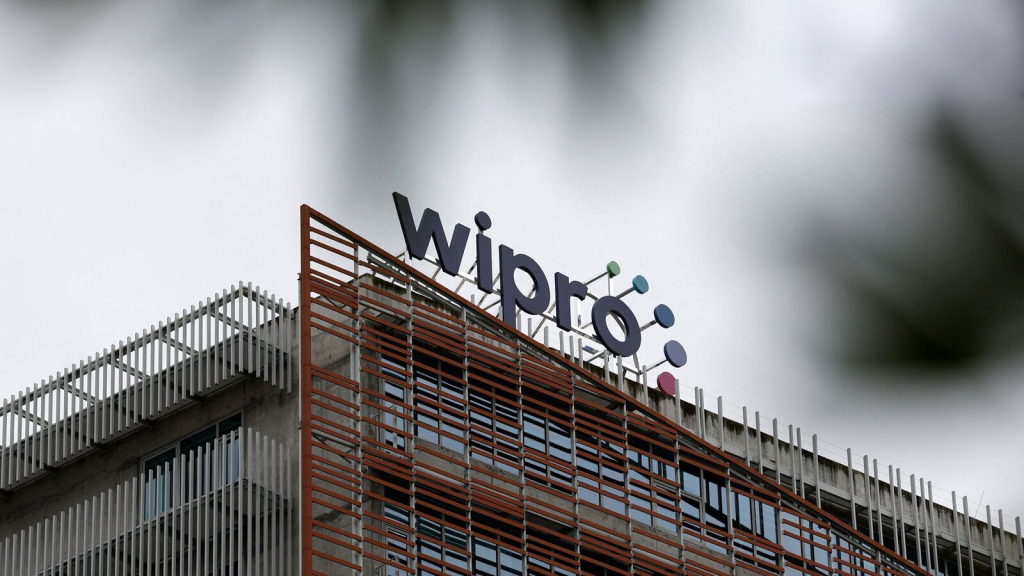
Wipro Ltd will take over the finance back-office operations of BP Plc and absorb about 3,000 of the London-based oil major’s employees in India, Hungary and Malaysia under a contract worth more than $500 million, as the Mumbai-based IT services company works to reverse a three-year decline in revenue.
The agreement is expected to generate an average of about $75 million in new business annually over the next six to seven years, two people with knowledge of the matter said. That works out to roughly 0.7% of Wipro’s revenue in the previous fiscal year — a modest lift for a company that ended fiscal 2026 with revenue of $10.48 billion, down 0.3% from the year before. The people said the contract is a new award rather than an extension of existing work.
Neither company has disclosed when the deal will close. In a stock exchange filing on Wednesday, Wipro said the new operating model is expected to begin in 2027, subject to certain conditions, so the revenue contribution is likely to become significant only from fiscal 2028. The timing means the contract will add little to Wipro’s top line in the near term. Wipro did not disclose the contract’s value or its duration in that filing.
“This landmark engagement with bp underscores our commitment to leveraging our deep domain expertise and Wipro Intelligence to drive large-scale technology transformation,” chief executive Srini Pallia said in the filing. “Through this collaboration, we aim to unlock measurable business outcomes for bp in the AI-first world.”
For BP, the deal is expected to simplify operations and create value, according to the filing. “Wipro brings specialist digital capabilities and investment that will help us make better use of finance operations technology, deliver value for the business more quickly and simplify how we work,” said Kate Thomson, the oil company’s chief financial officer. BP ended 2025 with revenue of $189.34 billion, up 0.1%, marginally reversing a decline in 2024.
The win offers some relief to Pallia, who has struggled to drive growth since taking the top job in April 2024. An uncertain geopolitical environment and the spread of artificial intelligence, which is encroaching on work long handled by technology outsourcers, have compounded the challenge, and the chief executive has faced persistent questions about Wipro’s execution on large contracts.
The contract had been in the pipeline. One of the two people said management had signaled it during a post-earnings press conference last month, when it was asked why large deal wins in the September quarter had fallen to their lowest level in nearly four years. Executives attributed the dip to deals that had been “awarded but not signed” and said they expected to close them in the current quarter. “This was the deal that got pushed. It was a mega deal,” that person said.
IT services companies generally classify contracts of $500 million or more as “mega” deals, while some market observers reserve the label for awards of $1 billion and above.
The BP award adds to what has been Pallia’s strongest year for large deal wins since he became chief executive. In April, Wipro ended a six-year drought in mega deals with an IT transformation contract worth $1 billion over eight years from Singapore-based food processing group Olam. As part of the broader engagement, Wipro agreed to acquire Mindsprint, Olam’s IT arm, for $375 million in an all-cash deal.
Whether the new business is enough to return Wipro to growth also depends on how much work it retains at its largest existing clients. The company stands to lose as much as $100 million a year from Estée Lauder, which moved its IT work to Accenture, and expects to lose another $25 million a year from Meta, which scaled back its outsourcing contract.
At least one analyst called the BP deal a defining moment. “For Srini Pallia and his leadership team, this is a defining win that strengthens Wipro’s credibility in the global market and demonstrates renewed competitive muscle,” said Phil Fersht, chief executive of HFS Research.